
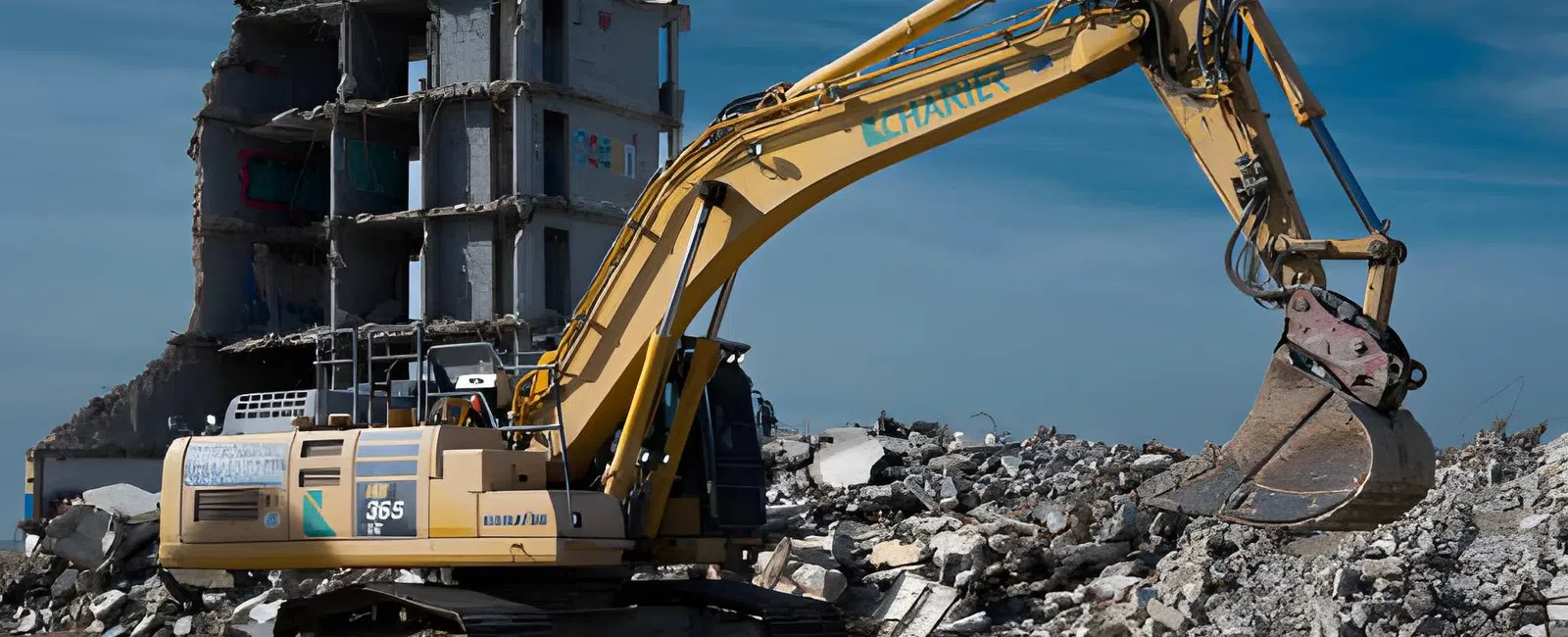
When a building needs to come down, there is more than one way to do it. Most people picture demolition, the machines, the dust, the structure coming down fast. But there is another approach called deconstruction, where a building is taken apart carefully so its materials can be saved and reused. Both clear the site. They just go about it very differently, and the right choice depends on your project, your timeline, and your goals.
What Is Demolition?
Demolition is the conventional approach: using heavy machinery to bring a structure down efficiently. Excavators, loaders, and hydraulic tools do the work, and the building comes down in a controlled but relatively fast sequence. The debris is then hauled away, and a responsible contractor sorts and recycles what can be recycled rather than sending it all to the landfill. Demolition is the right call when speed matters, when a structure is unsafe or beyond saving, or when the materials inside have little salvage value. It is the go-to method for most full teardowns.
What Is Deconstruction?
Deconstruction is sometimes described as demolition in reverse. Instead of tearing a building down all at once, the structure is taken apart piece by piece, often largely by hand, so that valuable materials come out intact. Hardwood flooring, timber beams, brick, doors, fixtures, and architectural details can all be recovered in reusable condition. Those materials are then reused, resold, or donated rather than crushed into rubble. Deconstruction takes more time and more labor than mechanical demolition, but it keeps far more material out of the landfill and puts it back into use.
The Key Differences at a Glance
Both methods end with a cleared site, but they differ in some important ways:
- Speed. Demolition is fast and machine-driven. Deconstruction is slower and more deliberate.
- Labor. Demolition relies on equipment and a small skilled crew. Deconstruction is labor-intensive and hands-on.
- Material recovery. Demolition recovers materials mainly through recycling the debris. Deconstruction recovers materials intact for direct reuse.
- Waste. Deconstruction typically sends far less to the landfill than a straight teardown.
- Best fit. Demolition suits unsafe, low-salvage, or time-sensitive jobs. Deconstruction suits buildings rich in reusable materials where time allows.
Neither one is simply better than the other. They are tools for different situations, and the smart move is matching the method to the building in front of you.
The Pros and Cons of Demolition
Demolition's biggest strengths are speed and efficiency. It clears a site quickly, handles unsafe or unstable structures well, and works on almost any building. The tradeoff is that even with good recycling, more material tends to end up as waste than with deconstruction, and fewer items come out in reusable condition. For a structure that is unsafe, badly deteriorated, or simply not full of salvageable materials, those tradeoffs are usually well worth it.
The Pros and Cons of Deconstruction
Deconstruction's strength is material recovery and a much smaller environmental footprint. It rescues high-value, reusable materials, keeps waste out of the landfill, and supports green building goals and certifications. The tradeoffs are time and labor, since taking a building apart carefully takes longer and requires more hands. It also makes the most sense for buildings that actually contain materials worth saving, like older structures with quality wood, brick, or architectural features. For the right building, the payoff in recovered material is significant.
How to Decide Which One Fits Your Project
A few questions usually point you toward the right approach. Is the structure safe enough to take apart slowly, or is it unstable and better brought down quickly? Is your timeline tight, or do you have room for a longer process? Does the building hold materials worth recovering, like solid timber, brick, or quality fixtures, or is it mostly low-value material? And how important is maximizing reuse and minimizing landfill waste to you? In practice, many projects land on a hybrid: salvaging the valuable materials first through selective deconstruction, then using mechanical demolition for the rest. A good contractor walks the site with you and recommends the approach that fits the building, your schedule, and your goals.
What About Cost and Time?
It depends on the building and the project. Deconstruction generally takes more time and labor, while it can recover valuable materials and reduce disposal needs. Demolition is typically faster. Because every structure and site is different, the only reliable way to compare the two for your specific project is a proper assessment.
Frequently Asked Questions
What is the difference between deconstruction and demolition?
Demolition uses heavy machinery to bring a structure down quickly, then recycles the debris where possible. Deconstruction takes the building apart piece by piece, often by hand, so materials can be recovered intact for reuse. Demolition is faster; deconstruction recovers more material.
Is deconstruction cheaper than demolition?
It depends on the building and project. Deconstruction takes more time and labor but can recover valuable materials and reduce disposal needs, while demolition is generally faster. The reliable way to compare for your project is a site assessment and a quote.
Can you combine the two methods?
Yes, and many projects do. A common approach is to selectively salvage the valuable materials first, then use mechanical demolition for the rest. This balances material recovery with speed.
Which approach is more environmentally friendly?
Deconstruction usually keeps more material out of the landfill because items are recovered for direct reuse. That said, demolition paired with strong recycling still diverts a meaningful amount of material, especially concrete and metal.
Not Sure Which Approach You Need? Let Us Help
Choosing between deconstruction and demolition is easier with someone who does both and will tell you straight which fits your project. BHH Demolition is veteran-owned and operated, led by U.S. Army veteran Grady Brain, with more than 23 years of experience, an impeccable safety record, and recycling built into every job. We serve the Atlanta metro and communities across Georgia from our home base in Oxford.
We are ready when you are. Call us or contact us online for a free, no-pressure quote, and we will help you take your structure down the right way.