
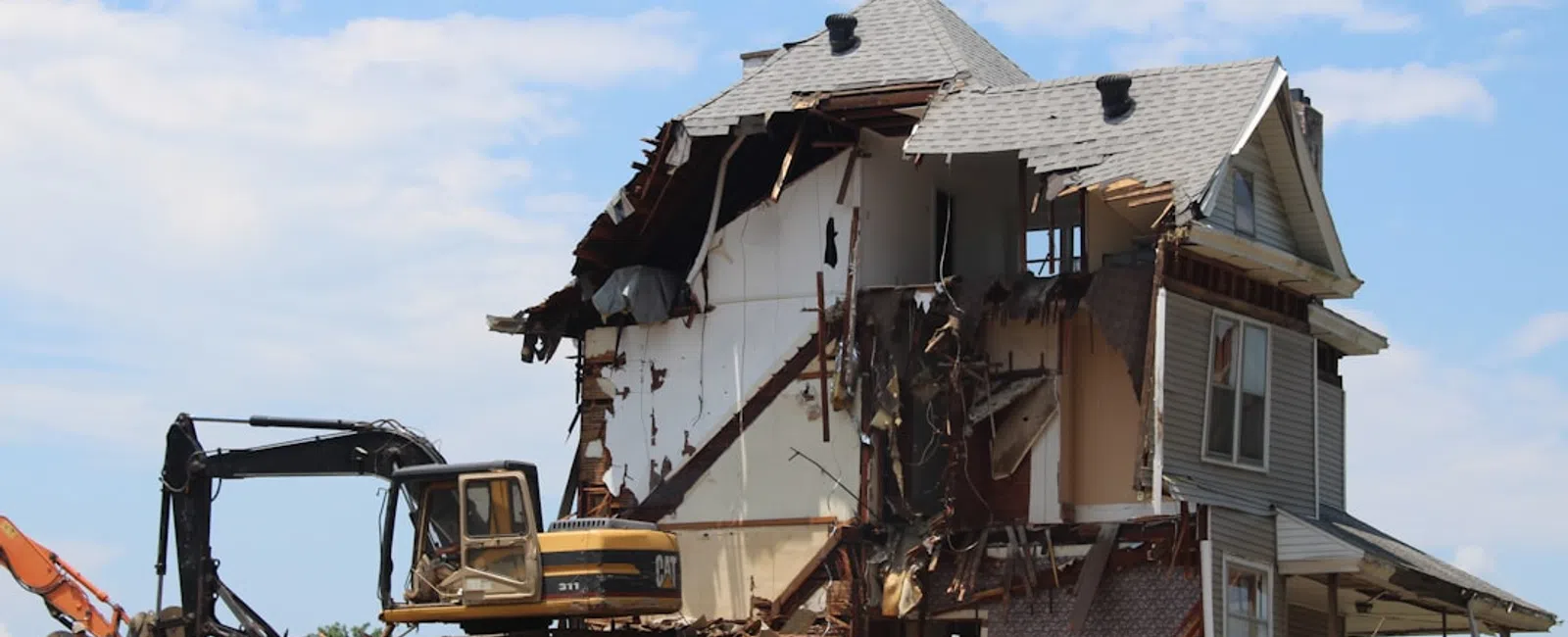
Demolition sounds simple: knock a building down and haul it away. In practice it is a planned, regulated, carefully sequenced process that starts long before any equipment shows up and does not end until the site is clean and safe. Whether the job is a single shed or a multi-story commercial building, the same fundamentals apply: assess, plan, protect, take it down in the right order, and clear the debris responsibly.
What Is Demolition?
Demolition is the controlled dismantling, tearing down, or removal of a structure, from a backyard shed to an industrial facility. The goal is almost always to clear the way for something next: a new build, an addition, a redevelopment, or simply a safer, more usable piece of property. The part people underestimate is everything around the teardown itself. A real demolition includes inspecting the structure, pulling permits, disconnecting utilities, removing hazardous materials, taking the building down in a planned sequence, and hauling and recycling the debris. The visible part, the structure coming down, is often the shortest step.
The Main Types of Demolition
Demolition is not one service. The right approach depends on the structure, the site, and what comes next, and the methods range from mechanical teardown to careful deconstruction. The broad categories most projects fall into are:
- Residential demolition, taking down houses and outbuildings.
- Commercial demolition, for offices, retail, and similar buildings.
- Interior demolition, or a soft strip, where the inside of a building is removed while the structure stays standing.
- Industrial demolition, for plants and heavy facilities, which adds decommissioning and contamination management.
- Selective demolition and deconstruction, where specific parts are removed or the structure is taken apart to salvage materials.
What Gets Demolished
Demolition covers far more than whole buildings. On the residential side, that includes entire houses, garages, mobile homes, sheds, decks, and inground and above ground pools. It also includes hardscape like concrete driveways, patios, and slabs. Each one is its own kind of job, but all of them follow the same core process.
How the Demolition Process Works
A safe demolition moves through clear phases, and the order is what keeps it under control.
- Assessment and planning. The structure is evaluated for size, construction, condition, and surroundings, and a plan is built around how it can come down safely.
- Permits. Most jurisdictions in Georgia require a demolition permit, and many require documented utility disconnects before issuing it.
- Utility disconnects. Power, water, gas, and sewer are safely shut off and disconnected before any structural work begins.
- Hazardous material removal. Older buildings can contain asbestos and lead, so testing and removing asbestos before demolition happens first when needed.
- The teardown. The structure is taken down in a controlled sequence, by machine, by hand, or a combination, depending on the method chosen.
- Debris removal and recycling. The material is hauled off and recycled where possible, which is the heart of construction debris removal.
- Site clearing and grading. The lot is leveled and left ready for its next use, often as part of site clearing.
What Affects Demolition Cost
There is no single price for demolition, because the variables are wide. Size and construction type set the baseline, then access, hazardous materials, debris volume, foundation removal, and permit fees move the number from there. A small wood structure on an open lot and a masonry building on a tight urban site are very different jobs. Because the range is so broad, a real figure only comes from a walkthrough, and a trustworthy estimate itemizes the pieces rather than burying them in one lump sum.
Why Demolition Is a Job for Professionals
Demolition combines structural hazards, live utilities, hazardous materials, heavy equipment, and strict regulations, which is exactly why it is not a DIY undertaking. A professional crew carries the licensing and insurance, knows the permitting, manages the abatement, takes the structure down in a safe sequence, and leaves the site clean and graded. The result is a finished, compliant job instead of a risk and a mess. For a property owner, the value is not just the teardown; it is everything handled correctly around it.
Frequently Asked Questions
What is demolition, in simple terms?
It is the planned, controlled removal of a structure, including the inspection, permits, utility disconnects, hazardous material removal, teardown, and debris cleanup that go with it. It is a process, not just a single act of knocking something down.
What is the difference between demolition and deconstruction?
Demolition takes a structure down efficiently, usually by machine. Deconstruction takes it apart by hand to salvage materials for reuse, which is slower and costlier but recovers more. Many projects use a mix of the two.
How long does demolition take?
It depends on the size and type of structure, site access, and whether hazardous materials are present. A small residential teardown can be quick, while a large or complex building takes longer. We give a realistic timeline as part of the quote, after seeing the site.
Planning a Demolition? Start With a Free Quote
However big or small the project, demolition goes best when it is planned by people who do it for a living. BHH Demolition is veteran-owned and operated, led by U.S. Army veteran Grady Brain, with more than 23 years of experience, an impeccable safety record, and recycling built into every job. We serve the Atlanta metro and communities across Georgia from our base in Oxford.
Call us or tell us about your project online, and we will walk you through the right approach and put a free quote behind it.