
Trusted Driveway Culvert Installation Services
Licensed Culvert and Driveway Drainage Contractors Across Greater Atlanta and Georgia
Get A Free Quote
Your Dependable Partner for Driveway Culvert Installation
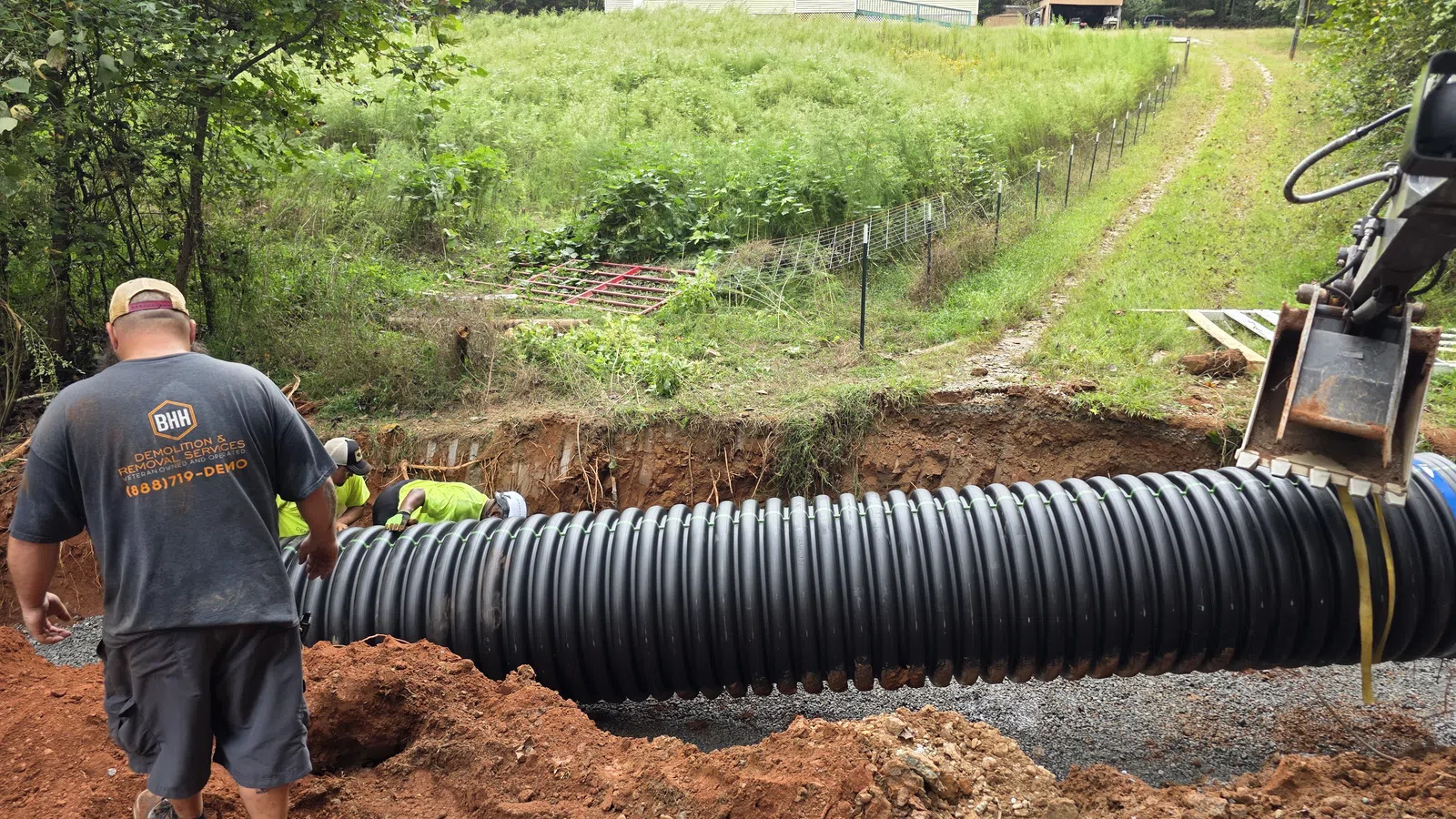
When you need a driveway culvert installed in Atlanta, Marietta, Cherokee County, or anywhere across Georgia, getting it wrong costs you twice. A pipe sized too small floods your driveway in heavy rain. Improper installation leads to washouts, sinkholes, and county compliance issues. BHH Demolition is a veteran-owned, licensed, and insured culvert installation company with over 25 years of experience handling driveway culverts, replacement pipes, culvert pipe sizing, drainage design, and full residential driveway culvert systems. From handling county permits and pipe sizing to headwalls and final compaction, we deliver code-compliant culvert installations that property owners and builders across Georgia trust to get the job done right.

What Property Owners Say About BHH
Driveway Culvert FAQ
Do I need a permit to install a driveway culvert in Georgia?
Yes, in nearly every case. Most Georgia counties require a permit from the county Department of Transportation or public works office before installing or modifying a driveway culvert. Some require engineer-approved drainage plans for larger pipes or commercial driveways. We handle the permit application and county coordination as part of the project.
What size culvert pipe do I need for my driveway?
Most residential driveways use 15-inch, 18-inch, or 24-inch HDPE or corrugated metal pipe. The right size depends on the watershed flowing through the ditch, the slope of the road, the depth of the ditch, and county requirements. Pipes that are too small flood. Pipes that are too large waste money and don't look right. We size every culvert during the site assessment.
How long does culvert installation take?
A standard residential driveway culvert install is typically completed in one day. Replacement projects can take one to two days depending on what we find under the old pipe. Larger commercial culverts or installations requiring extensive grading or headwall work can run two to three days.
What type of culvert pipe is best for driveways?
For most residential driveways, HDPE (high-density polyethylene) plastic pipe is the modern standard. It's lighter than metal or concrete, doesn't rust, handles ground movement well, and lasts decades. Galvanized corrugated metal pipe is still used in some applications, but it rusts out in 20 to 30 years in Georgia's wet clay soils. We recommend HDPE for nearly every residential install.
Will I need a headwall on my driveway culvert?
A headwall is recommended whenever the embankment is steep enough that erosion is a concern, when county code requires it, or when you want a finished, professional look at the driveway entrance. Headwalls are typically concrete or stacked stone, with flared end sections and rip-rap erosion protection. We include headwall options in your quote when appropriate.
My driveway floods every time it rains. Can a new culvert fix that?
Often, yes. Most driveway flooding comes from one of three causes: an undersized culvert that can't handle the flow, a crushed or blocked pipe that's no longer functional, or a poorly graded ditch that doesn't channel water to the culvert. We diagnose the actual cause during the site visit, then recommend the right fix.
Can you handle commercial driveway culverts and multi-driveway projects?
Yes. We install larger commercial culverts for retail entrances, industrial driveways, and multi-driveway developments. Commercial installs typically require engineered drainage plans and county DOT coordination, which we handle as part of the project scope.