
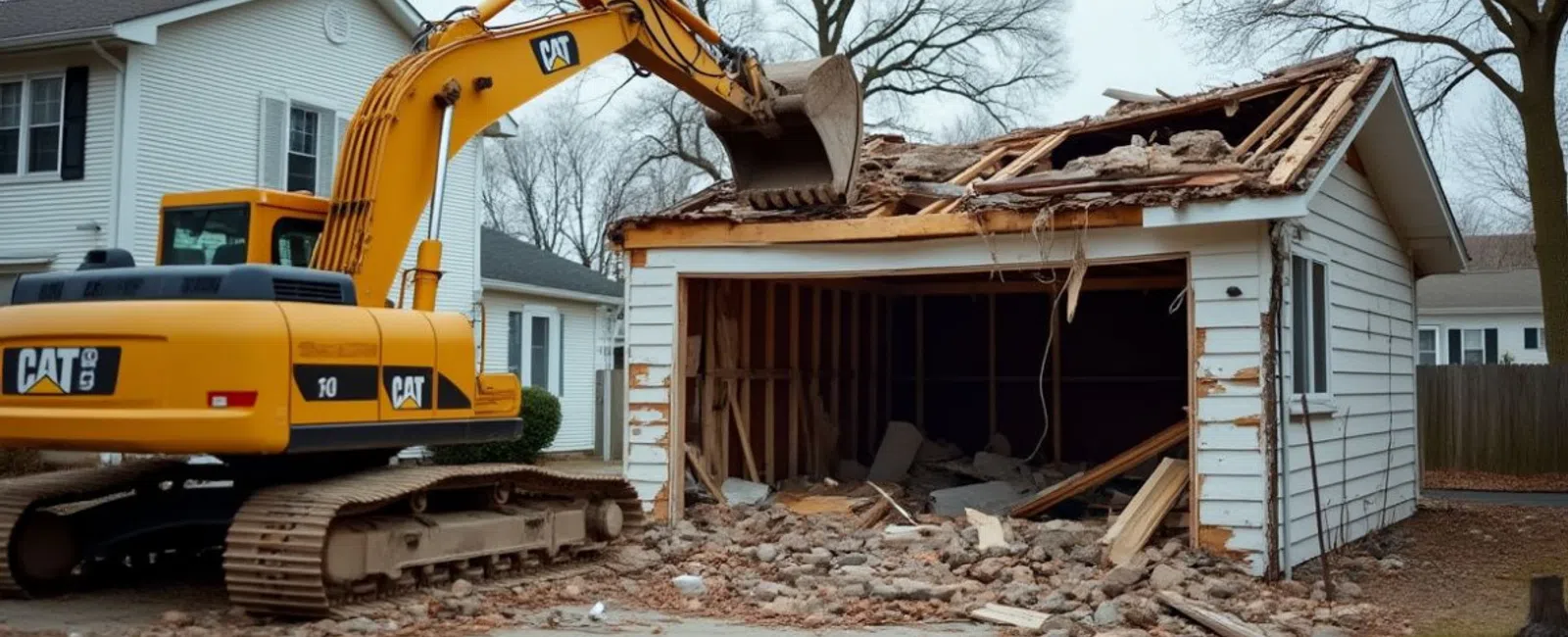
Most garage demolitions fall somewhere between $1,500 and $5,000, but that spread is wide because the garage in your backyard and the one sharing a wall with your house are very different jobs. Knowing what moves the number lets you budget accurately instead of guessing.
What Drives Garage Demolition Cost
Size sets the starting point, since a bigger garage means more structure to take down and more material to haul. A few other factors decide where in the range you land.
Construction type matters as much as size. A wood-framed garage comes apart faster than one built with block, brick, or poured concrete, which take more time and heavier equipment to break and sort.
The slab and foundation are often a separate line. Most garages sit on a concrete pad, and breaking it up and hauling it away is its own scope of work. If you want the pad gone rather than reused, concrete slab removal gets folded into the project so you end up with clear, level ground.
Access and location shape the method. A garage with open, drive-up access lets equipment work quickly. One boxed in by fences, landscaping, or a tight side yard takes more hand work, and that is common on older lots across the Atlanta metro, where staging room is limited.
Hazardous materials are the usual budget surprise. Garages built before the 1980s can contain asbestos or lead paint, and detecting and safely removing asbestos before demolition is a regulated, licensed step that has to finish before the teardown begins. Testing early keeps it a line item, not a mid-job shock.
Debris and disposal carry real weight. A demolished garage produces meaningful tonnage, and tipping fees scale with it. Recycling concrete, metal, and wood offsets part of that, and our debris removal and recycling team keeps as much as possible out of the landfill.
Permits and utility disconnects round out the scope. Georgia jurisdictions require a demolition permit, and any power, water, or gas run to the garage has to be safely disconnected before work starts.
Detached vs Attached Garages
This distinction does more to your price than almost anything else. A detached garage is a standalone structure, so it comes down on its own with straightforward debris handling and fewer precautions, which keeps it on the lower end of the range.
An attached garage shares one or more walls with your house, so the demolition has to protect the home at every step. The shared wall has to be separated cleanly, utilities running through it managed, and the exposed side of the house sealed and finished. That extra care adds labor and pushes an attached garage toward the higher end. It is exactly the kind of work that rewards an experienced crew over a low bid.
Full Teardown vs Deconstruction
There is also a choice in how the garage comes down. A standard mechanical teardown is fast and usually the most economical: the structure comes down, the debris is sorted and hauled. Deconstruction takes the garage apart by hand to salvage usable lumber, doors, and materials, which costs more in labor but can recover value and reduce waste. The method that fits your project depends on the garage and your goals.
Why Garage Demolition Is Not a DIY Job
Doing it yourself looks like a savings until you add up what it actually takes: equipment rental, safety gear, disposal runs, and the real risk of injury or damage. A garage hides the same hazards a house does on a smaller scale, load-bearing framing, live utilities, and asbestos in older builds, and an attached garage adds the danger of damaging the home it connects to. A professional residential demolition crew removes those risks: the right equipment, permits handled, utilities coordinated, hazardous materials abated, and the debris hauled, often for less than a DIY attempt costs once the rentals and mistakes add up.
Frequently Asked Questions
How is garage demolition priced?
It starts with size and construction type, then layers in slab removal, access, hazardous material findings, and debris tonnage. Anything beyond the basic teardown, like foundation removal or asbestos abatement, is itemized. If a quote is one flat number with no breakdown, ask for detail.
Is an attached garage more expensive to remove?
Usually, yes. Separating it from the house, managing shared utilities, and sealing the exposed wall all add labor and care that a detached garage does not require. The protection of your home is built into that cost.
Do I need a permit to demolish a garage in Georgia?
In most jurisdictions, yes. A demolition permit and documented utility disconnects are typically required, and older structures may need asbestos clearance first. We handle the permitting as part of the project. The same rules scale up for demolishing a full house, if your project is bigger than the garage.
Get a Firm Quote for Your Garage Teardown
A range helps you plan, but your garage, your lot, and whether it is attached set the real number, and that takes a quick look in person. BHH Demolition is veteran-owned and operated, led by U.S. Army veteran Grady Brain, with more than 23 years of demolition experience, a safety record we stand behind, and recycling built into every job. We serve the Atlanta metro and communities across Georgia from our base in Oxford.
Call us or get your free quote online, and we will turn that range into a firm price for your garage.