
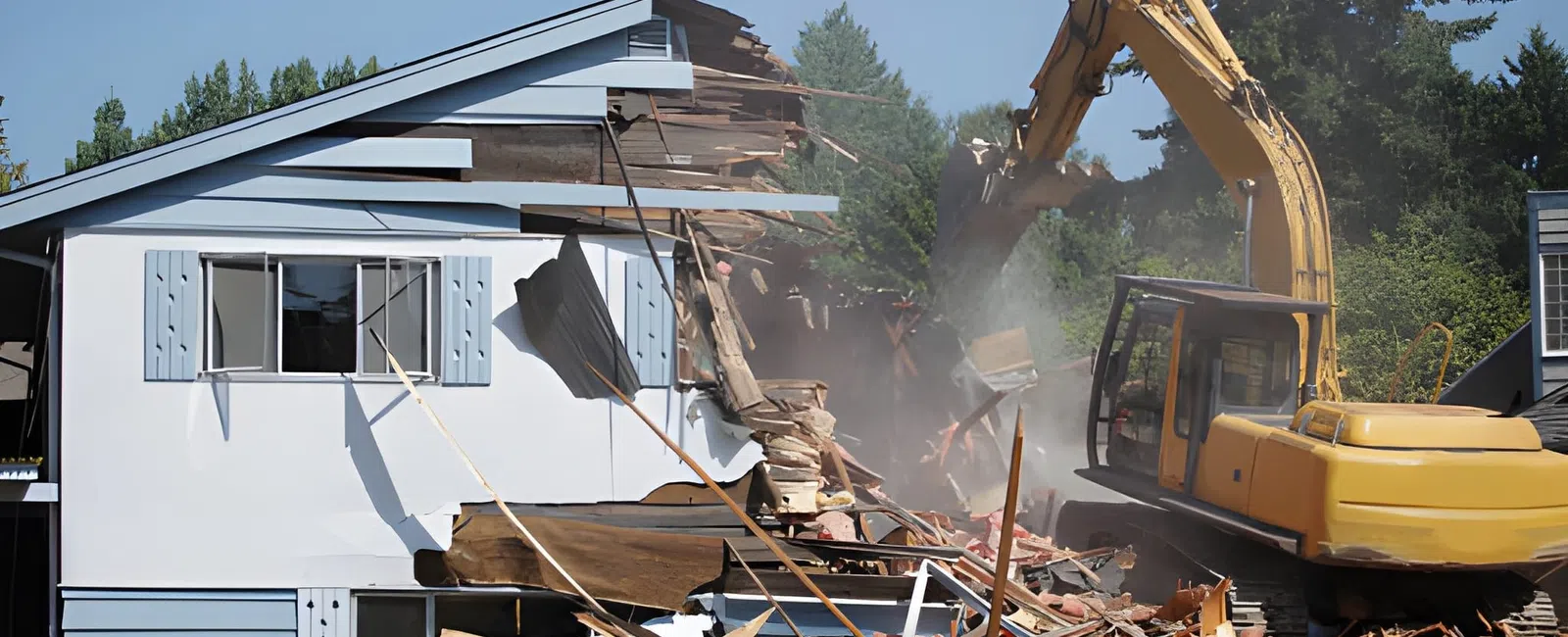
Most people picture a house demolition as an excavator tearing through walls in an afternoon. The teardown is real, but it is the shortest part of the job. A full house demolition is a planned, regulated, multi-stage operation, and almost all of the work happens before and after the structure comes down. Knowing what to expect at each phase helps you plan around it and tells you whether a contractor is doing it right.
Phase 1: Planning, Permits, and Prep
Demolition starts long before the first wall comes down, and this phase is where most of the surprises get headed off.
- Inspection and assessment. A professional evaluates the home's structure, materials, and hazards. Homes built before the 1990s often need asbestos removal services, and this is also when salvageable materials, beams, fixtures, brick, are identified.
- Permits. Every jurisdiction requires documentation before demolition. The contractor handles the permit applications, safety plans, and utility-disconnection authorizations so the project stays compliant with local zoning and environmental rules.
- Utility disconnects. Electricity, gas, water, and sewer are properly capped and disconnected. Skipping this is how teardowns turn into fires, flooding, or electrocution.
- Site preparation. Temporary fencing and signage restrict access, nearby structures and trees are protected or removed, and a clear workspace is set up so equipment can maneuver safely.
Phase 2: Hazardous Material Removal
When testing turns up asbestos, lead, or mold, it has to be removed before the structure is touched. Certified crews use protective gear and containment, seal off the affected areas, and run negative-pressure systems so nothing goes airborne, then dispose of the material at approved facilities under EPA and OSHA rules. It is a separate, regulated step, and rushing or skipping it is one of the most dangerous shortcuts in the whole process.
Phase 3: Choosing the Method
The right approach depends on the house, its materials, and what surrounds it. Most homes come down by mechanical demolition, an excavator working from the roof down in a controlled sequence. Some are taken apart by hand through deconstruction to salvage materials, which is slower but recovers more. Implosion is reserved for large structures and is essentially never used on houses.
Phase 4: The Teardown, Top to Bottom
Once permits are in place and the safety zones are set, the physical demolition begins, and it follows a deliberate order.
- Top-down removal. Crews start at the roof, taking down trusses, chimneys, and upper walls first to keep the collapse controlled and predictable.
- Walls and floors. Interior partitions and flooring come down next, with the machine switching attachments as the materials change.
- Foundation and substructure. The slab, footings, and any basement walls are broken out last, which is where concrete removal becomes its own scope of work.
Throughout, the crew monitors vibration, dust, and noise to keep the work within safety thresholds and minimize disruption to the neighborhood.
Phase 5: Debris Removal and Recycling
After the structure is down, the material is sorted rather than just dumped. Concrete and brick are crushed into aggregate, metal goes to scrap recycling, and clean timber is reclaimed or mulched. Recycling keeps a large share of the debris out of the landfill and can offset part of the project cost. This is the heart of construction debris removal, and on our jobs it is handled in house as part of the teardown.
Phase 6: Cleanup and Site Preparation
The final stage turns the lot back into a blank canvas. The soil is leveled and compacted for stability, and specialists check for contaminants like oil residue, asbestos fragments, or heavy metals, with remediation if anything is found. A final inspection confirms the debris is cleared, the utilities are safely terminated, and the site meets environmental benchmarks. At that point the lot is ready for construction or landscaping, often handed off directly into site preparation for the next build.
Why a Licensed Contractor Matters
Every phase above carries risk, permits, live utilities, hazardous materials, heavy equipment, and environmental rules, which is why a full house demolition is never a DIY project. A licensed, insured residential demolition team handles the compliance, the safety, the recycling, and the cleanup correctly. An unlicensed crew might cost less up front but can leave you with fines, violations, or an environmental cleanup that costs far more than the savings.
Frequently Asked Questions
How long does a house demolition take?
It depends on the size and construction of the home, site access, and whether hazardous materials have to be removed first. Permitting and abatement happen before any machinery starts, and the teardown itself is usually the quickest part. We give you a realistic schedule with your quote, after seeing the property.
Do I need permits before demolition?
Yes. Local authorities require demolition permits to ensure safety and environmental compliance, and your licensed contractor handles the applications and approvals as part of the project.
What happens to the debris?
It is sorted for recycling and disposal. Concrete, metal, and timber are reused or processed for new construction wherever possible, which keeps tonnage out of the landfill and helps control cost.
Planning a Teardown? Let Us Walk You Through It
A house demolition goes smoothly when every phase is planned by people who do it for a living. BHH Demolition is veteran-owned and operated, led by U.S. Army veteran Grady Brain, with more than 23 years of experience, an impeccable safety record, and recycling built into every job. We serve the Atlanta metro and communities across Georgia from our base in Oxford.
Call us or tell us about your project online, and we will walk you through the process and put a free quote behind it.