
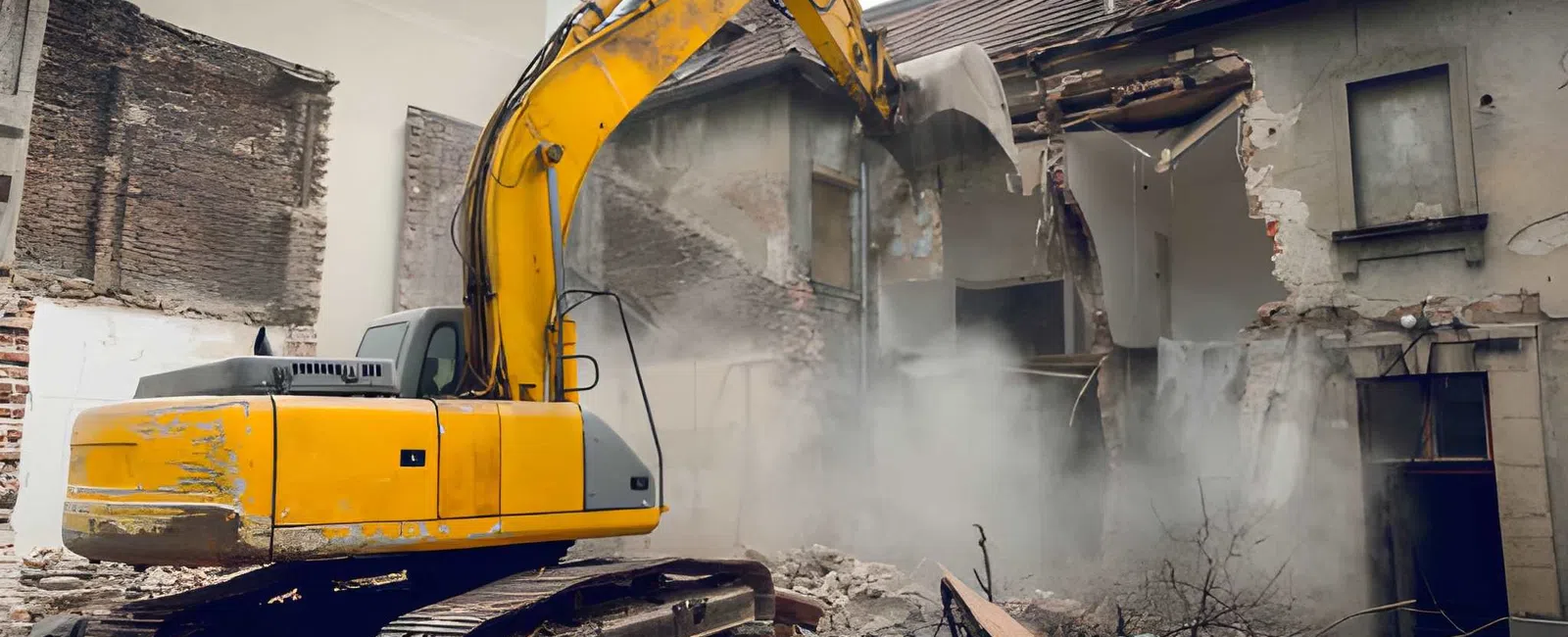
What Is Commercial Interior Demolition?
Commercial interior demolition is the selective removal of the inside of a commercial building, the walls, ceilings, flooring, fixtures, and systems, while leaving the core structure standing. Unlike a full teardown that brings down the entire building, interior demolition is about stripping a space back to its shell so it can be rebuilt for a new use. The exterior walls, the structural frame, the roof, and the load-bearing elements stay in place. Everything that made the space work for the last tenant comes out, leaving a clean slate for the next build-out. It is precise, controlled work, not a wrecking ball.
What Gets Removed, and What Stays
On a typical commercial interior demolition, the crew removes the non-structural elements while protecting everything that has to remain. What usually comes out includes:
- Interior walls and partitions that divide up the space.
- Dropped ceilings, ceiling tiles, and grid systems.
- Flooring, carpet, tile, and underlayment.
- Built-in fixtures, cabinetry, millwork, and shelving.
- Non-structural mechanical, electrical, and plumbing components tied to the old layout.
What stays is the bones of the building: the structural frame, load-bearing walls, exterior shell, and core systems that the new design will build on. Knowing the difference between the two, and never removing something structural by mistake, is exactly why this is a job for an experienced crew.
Why Businesses Need Interior Demolition
Commercial interior demolition is almost always the opening act of a bigger project. Businesses turn to it for a handful of common reasons:
- Tenant improvements and build-outs. A new tenant takes over a space and needs it reconfigured for their business.
- Remodels and rebrands. An existing business updates its look, layout, or function.
- Reconfiguration. An office, store, or facility changes how it uses the space, opening it up or dividing it differently.
- Use changes. A unit shifts from one type of business to another, like retail to restaurant, which often means gutting the old layout entirely.
In each case, you cannot build the new space until the old one is cleared. Interior demolition is what makes the transformation possible.
What to Expect: The Process
A well-run commercial interior demolition follows a clear sequence, with safety and protection built in at every step:
- Assessment and planning. The crew evaluates the space, the layout, and what needs to be removed versus protected, and builds a plan around it.
- Hazardous material check. Older commercial buildings can contain asbestos or lead, which must be identified and handled by licensed specialists before work begins.
- Protecting what remains. Areas, finishes, and systems that stay are covered and protected, and dust and noise controls are put in place.
- Utility and systems coordination. Relevant electrical, plumbing, and HVAC components are safely disconnected or capped before removal.
- Controlled removal. The interior elements come out in a planned order, carefully rather than all at once.
- Debris removal and recycling. Material is sorted, recycled where possible, and hauled away, leaving the space clean.
- Clean handover. The shell is left ready for the build-out crew to start fresh.
What Makes Commercial Different From Residential
Gutting a commercial space is a different animal from clearing out a house. Commercial buildings are often occupied or sit next to active businesses, so the work has to protect neighboring tenants, keep common areas clean, and sometimes happen after hours or in phases to avoid disrupting operations. There is usually coordination with property managers, building rules to follow, and tighter requirements around dust, noise, and access in an active building. Commercial structures also tend to have more complex mechanical, electrical, and plumbing systems running through them. All of this means commercial interior demolition takes more planning and coordination than a residential job, which is why experience with commercial work specifically matters.
Why It Is a Job for Professionals
Interior demolition can look simple from the outside, but the risks are real. Remove the wrong wall and you compromise the structure. Disturb asbestos or old materials and you create a health hazard. Mishandle the electrical or plumbing and you cause damage or danger. A professional commercial demolition crew knows how to tell structural from non-structural, tests for hazardous materials, protects the parts of the building that stay, follows code and permitting, and recycles the debris responsibly. The result is a space cleared safely, cleanly, and on a schedule that respects your project, rather than a costly problem handed to your build-out team.
Frequently Asked Questions
What is included in commercial interior demolition?
It typically includes removing interior walls, ceilings, flooring, fixtures, millwork, and non-structural mechanical, electrical, and plumbing components, while protecting the structure and the areas that remain, followed by debris removal and recycling.
Is interior demolition different from a full teardown?
Yes. A full teardown removes the entire building. Interior demolition removes only the inside of a space while leaving the structural shell standing, so it can be rebuilt for a new use.
Do you need a permit for commercial interior demolition?
Often, yes. Many jurisdictions require permits even for interior work to ensure structural safety and proper handling of materials and waste. A licensed contractor confirms and manages the permitting for your location.
Can a business stay open during interior demolition?
Sometimes, depending on the building and scope. Commercial projects can often be phased or scheduled after hours to limit disruption to neighboring tenants or ongoing operations. Your contractor can plan the work around your situation.
Planning a Build-Out in Georgia? Start With a Clean Shell
Every successful commercial build-out starts with a space that has been cleared the right way, safely, cleanly, and without touching what needs to stay. BHH Demolition is veteran-owned and operated, led by U.S. Army veteran Grady Brain, with more than 23 years of experience, an impeccable safety record, and recycling built into every job. We serve the Atlanta metro and communities across Georgia from our home base in Oxford.
We are ready when you are. Call us or reach out online for a free, no-pressure quote, and we will clear your space and set your next project up for a clean start.