
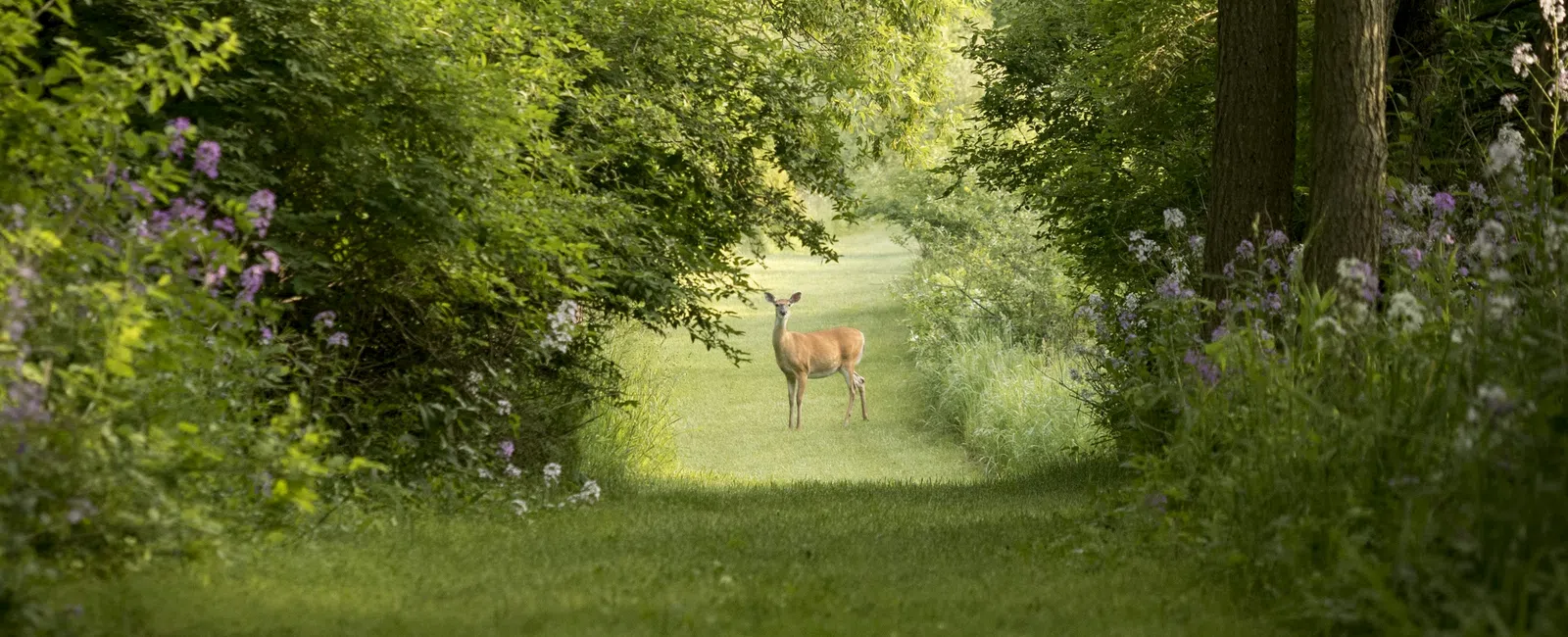
Every hunter wants the same thing: more deer using their property, more often, in daylight, where they can hunt them. Here is the encouraging part: holding deer is not luck. Deer go where their needs are met, and when you set your land up to meet those needs better than the property next door, they spend more time on yours. That is what property setup is really about, building a place deer want to live, not just pass through.
Start With What Deer Actually Need
Deer organize their lives around four basic needs: food, water, cover to feel safe, and security from pressure. A property that supplies all four, and keeps them close together, gives deer little reason to leave. Most land is missing at least one of these, or has them scattered so far apart that deer only pass through. The goal of property setup is to supply the missing pieces and arrange them so a deer can eat, drink, bed, and feel safe without ever stepping off your land. Get that right and you go from seeing the occasional deer to holding a resident herd.
Give Them a Reason to Stay
Food is the biggest draw and the most reliable way to pull deer onto a property and keep them coming back. That means more than a single plot. The strongest setups combine quality food plots for concentrated, high-attraction feeding with native browse improved through selective clearing and forestry mulching, which opens the canopy and lets the low, leafy growth deer actually eat come back thick. Year-round food matters too: a property that feeds deer in every season holds them far better than one that goes bare after the first frost. Building that food base is foundational land work, and it is where a lot of properties win or lose.
Cover and Bedding
Food gets deer onto a property, but cover is what makes them live there. Deer need thick, secure bedding areas where they feel protected, especially mature bucks, which are unforgiving about security. Many properties are too open or too uniform to hold deer during daylight. Creating cover through forestry mulching and strategic clearing, which thickens edge habitat and encourages dense low growth, gives deer the security they want and keeps them on your land in the daytime instead of bedding on the neighbor's. The interplay of food next to cover is what turns a property into a place where deer stay.
Water
Water is easy to forget, but a reliable water source on the property removes one more reason for deer to wander off it. In much of Georgia, natural water is around, but not always where you want deer to be. Positioning food, cover, and water so they sit close together concentrates deer movement into the areas you can hunt, rather than spreading it across the whole county. It is a small piece that pays off in how tightly deer hold to your ground.
Security and Pressure
Here is the one that quietly ruins good properties: pressure. You can have perfect food and cover, but if deer constantly wind you, hear you, or see you coming and going, they shift to nocturnal movement or leave entirely. Thoughtful property setup designs around this. Screening cover along boundaries and field edges hides movement, and well-placed access routes and roads let you slip in and out without blowing through bedding areas or feeding zones. Sometimes the single biggest improvement to a property is not adding something deer want, it is changing how you move through the land so you stop pushing them off it.
Set the Property Up to Actually Hunt
Attracting deer is only half the job. The property also has to be huntable, and that is its own kind of land work. Shooting lanes cut through thick cover give you clean, ethical shot opportunities. Cleared access roads let you reach stands quietly and from the right wind. Prepped stand and blind sites put you in the right spot relative to bedding, food, and the prevailing wind. Tie these together and you have a property where the deer you have worked to attract are actually within reach when the season opens, instead of moving just out of range.
Put It Together as a Plan
The properties that consistently hold deer are not random. They are set up as a system, with food, cover, water, security, and access working together across the whole property. That usually starts with walking the land, reading the terrain and the deer movement, and building a plan that fits both your acreage and your hunting style. Whether you hunt a few acres or manage hundreds, the principle is the same: arrange the pieces so deer can meet every need on your ground, and so you can hunt them without tipping your hand.
Common Mistakes That Keep Deer Away
Most properties that struggle share a few of the same problems:
- Too much pressure. Sloppy access and over-hunting push deer to move at night or leave.
- Food only part of the year. A plot that disappears after the first frost stops holding deer when it matters most.
- No real cover. Open, uniform ground gives deer nowhere secure to bed during daylight.
- Everything spread out. Food, water, and cover scattered across the property send deer wandering off it.
Each of these is fixable with the right land work, and fixing even one or two often changes how a property hunts.
Why Bring in a Pro
Turning raw or underused acreage into productive hunting property takes equipment and know-how that most landowners do not have sitting in the barn: forestry mulchers, tractors, and the experience to read a property and prioritize the work that will actually move the needle. A professional land crew handles food plot installation, selective clearing, forestry mulching, shooting lanes, access roads, and stand site prep as one coordinated effort, one crew, one plan, one point of accountability. If you would rather spend your time hunting than fighting your equipment and guessing, that is where it pays to bring in help.
Frequently Asked Questions
What is the best way to attract deer to your property?
Supply what deer need in one place: quality food, secure cover, water, and low hunting pressure. Food plots and improved native browse draw deer in, cover and security keep them there, and smart access lets you hunt without pushing them off.
How do I keep deer on my property instead of the neighbor's?
Make your land meet all of a deer's needs close together, and keep pressure low. If deer can feed, bed, drink, and stay safe on your ground without being bumped, they have little reason to leave it.
Do food plots alone attract deer?
Food plots are a major draw, but food alone usually is not enough to hold deer through the season. Pairing food with secure cover, water, and low pressure is what keeps deer on a property rather than just visiting it.
How does land clearing help attract deer?
Selective clearing and forestry mulching open the canopy so native browse grows back thick, create edge habitat and bedding cover, and let you build shooting lanes and access. Used well, clearing improves both the food and the cover deer want.
Ready to Turn Your Land Into a Deer Magnet?
A property that holds deer is built, not stumbled into, and it comes from setting up food, cover, water, security, and access to work together. BHH Demolition is a veteran-owned, licensed, and insured land company led by U.S. Army veteran Grady Brain, with more than 25 years of land work across Georgia. We handle complete hunting property setup, food plot installation, selective clearing, forestry mulching, shooting lanes, access roads, and stand site prep as one coordinated effort. We serve hunters and landowners across the state from our home base in Oxford.
We are ready when you are. Call us or contact us online for a free, no-pressure quote, and let's build a property the deer do not want to leave.