
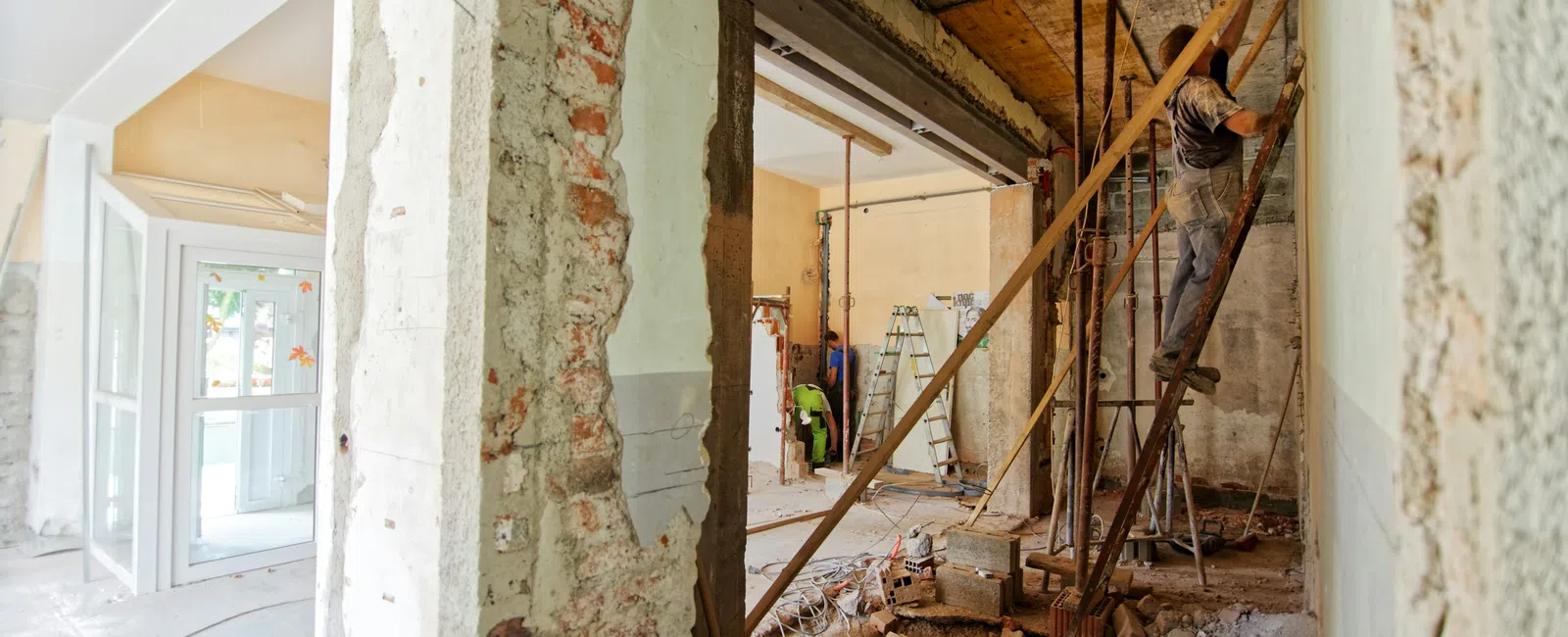
When a building is staying put but everything inside it has to go, that is interior demolition. It is how a tired retail unit becomes a clean slate for the next tenant, how an office gets reconfigured, and how a renovation starts. The structure stays standing; the partitions, ceilings, flooring, and fixtures come out. Done right, it is precise, controlled work, not a wrecking ball.
What Is Interior Demolition?
Interior demolition, sometimes called a soft strip or strip-out, is the selective removal of a building's interior while the structure, the roof, and the exterior walls stay intact. It is a focused form of selective demolition: instead of bringing a building down, a crew takes a space back to its bare shell or studs so it can be rebuilt. That distinction, structure stays, insides go, is what separates it from a full teardown.
What Comes Out in an Interior Demolition
The exact scope depends on how far back the space needs to go, but a typical strip-out removes:
- Non-load-bearing walls and partitions that define the old layout.
- Ceilings, including drop-ceiling grids, tiles, and the systems above them.
- Flooring, from carpet and tile down to adhesives and underlayment.
- Fixtures, cabinetry, millwork, and built-ins.
- Mechanical, electrical, and plumbing elements that are being replaced, disconnected and removed safely.
The line that cannot be crossed is the structure. Load-bearing walls, columns, and beams stay unless an engineer signs off, which is where interior work shades into structural demolition and needs a different plan entirely.
Where Interior Demolition Is Used
It is the first phase of most renovation and fit-out projects. Retail and restaurant spaces get stripped between tenants, offices are gutted and reconfigured, and older homes are taken back to the studs before a remodel. On the commercial side, it is the backbone of commercial interior demolition for tenant build-outs across Atlanta's dense commercial corridors, where a space has to be cleared quickly and cleanly so the next buildout can begin.
Why Interior Demolition Is a Precision Job
Interior work is harder than it looks precisely because so much has to survive. The crew is working inside a building that stays standing, often with occupied units next door or above, so dust control, noise, and protecting the floors, structure, and finishes that remain all matter. There is also what hides behind the walls: older buildings can carry asbestos and lead, which is why testing and removing asbestos before demolition comes first. And every line that stays live, electrical, plumbing, gas, has to be identified and protected while everything around it comes out.
That is the case against doing it yourself. A misjudged wall, a cut line, or disturbed asbestos turns a quick demo into an injury, an outage, or a code problem. A professional crew strips the space fast, protects what stays, manages the hazardous materials, and hauls the debris, with recycling handled through our debris removal team rather than a pile of bags in the parking lot.
Frequently Asked Questions
What is the difference between interior demolition and full demolition?
Full demolition takes the entire building down. Interior demolition removes only what is inside, the walls, ceilings, floors, and fixtures, while the structure and exterior stay standing, so the space can be rebuilt. It is selective, not total.
How is interior demolition priced?
It depends on the size of the space, how much is being removed, the materials involved, access, and whether hazardous materials are present. A walkthrough is the only way to scope it accurately, which is why we quote it after seeing the space, not over the phone.
Can you remove a wall during interior demolition?
Non-load-bearing walls, yes, routinely. Load-bearing walls can sometimes come out too, but only with proper engineering and temporary support to carry the load. We identify which is which before anything is touched.
Planning a Strip-Out? Start With a Walkthrough
Interior demolition is fastest and cleanest when it is planned around what stays, not just what goes. BHH Demolition is veteran-owned and operated, led by U.S. Army veteran Grady Brain, with more than 23 years of demolition experience, an impeccable safety record, and recycling built into every job. We serve the Atlanta metro and communities across Georgia from our base in Oxford.
Call us or contact us online, and we will scope the strip-out and put a free quote behind it.