
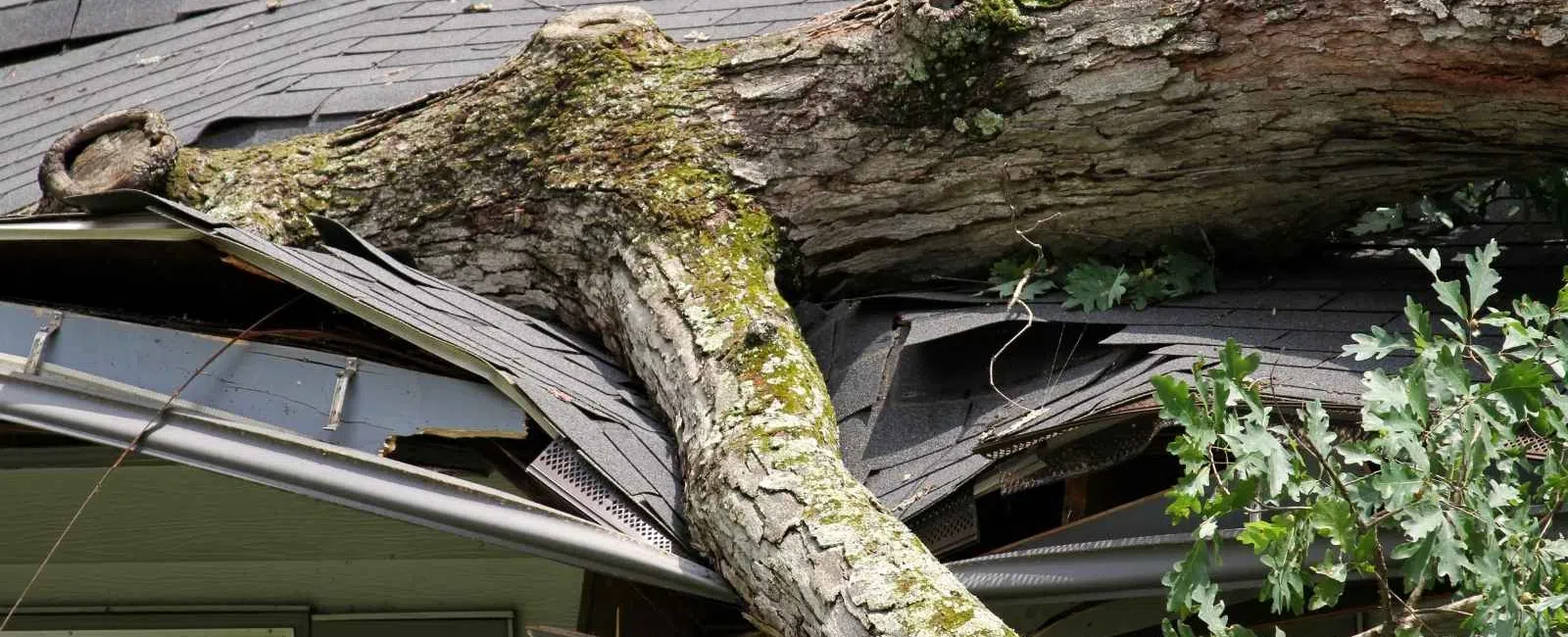
After Hurricane Helene, Richmond County crews picked up more than 3.1 million cubic yards of storm debris in Augusta. They only collected what homeowners dragged to the curb. A tree lying on a roof, a limb hanging over the driveway, or a shed crushed in the backyard stays where it is until the owner hires a crew with the equipment to remove it.
City and county crews only clear debris from the public right of way, the strip of land along the street. Cleanup on the rest of the property is the owner's responsibility, and that is where our storm cleanup crew does most of its work after a major storm.
What Curbside Collection Takes and What It Leaves Behind
County and city programs collect storm generated debris that residents cut and stack next to the street but not in it. The contractors running those routes load by category, so a pile of limbs mixed with roofing or a broken fence tends to get passed over. After Helene, Columbia County told residents to keep damaged building material and freshly cut trees out of storm debris piles, and warned that anyone setting non-storm debris on the right of way could be cited by code enforcement.
What stays behind falls into a predictable set: trees resting on roofs, fences, or vehicles; hangers, the broken limbs caught high in a canopy that can drop without warning; root plates, stumps, and trunks too heavy to move by hand; debris in backyards with no path to the road; and structural material such as shingles, framing, and siding, which falls outside a vegetative debris program.
| Debris after a storm | Curbside county pickup | Needs a crew |
|---|---|---|
| Limbs and brush cut to length and stacked on the right-of-way | Yes | No |
| Trees resting on roofs, fences, or vehicles | No | Yes, sectioned takedown with a grapple or crane |
| Hangers caught high in the canopy | No | Yes, removed from above before ground work starts |
| Root plates, stumps, and the craters they leave | No | Yes, excavator extraction, fill, and compaction |
| Debris behind the house with no path to the road | No | Yes, hauled out by machine |
| Roofing, siding, framing, and fencing | Sometimes, as a separate category | Yes, sorted and hauled |
| Crushed sheds, carports, and detached garages | No | Yes, handled as demolition |
A Tree on a Structure Comes Off in a Set Order
Pulling a fallen tree off a roof from the ground is how a damaged roof becomes a collapsed one. The trunk and main limbs are carrying load in ways that are hard to read, and a limb pinned under the tree can be bent like a spring, storing enough tension to kick when it is cut. We take the canopy off first, working top down in sections small enough for a grapple or crane to control, then lift the trunk clear so nothing drops or rolls onto the framing. If a service line is involved, nothing happens until the utility has cleared it.
Photos come before any cutting. The adjuster will want to see the tree where it landed, the point of contact on the structure, and the base or root plate. Once the tree is in pieces on the ground, that record is gone.
Root Plates and the Crater They Leave
Most trees that come down whole in Georgia storms fail at the roots rather than the trunk. Saturated clay loses its grip, and Helene arrived after a full day of rain that kept falling through the storm. The tree tips over with a disc of soil and roots attached, sometimes taller than a person, and leaves a crater where it stood.
The cutting sequence matters here too. A root plate is counterweighted by the trunk lying on the ground, and once the trunk is cut free near the base, the plate can drop back toward its hole with the stump attached. We cut the trunk in stages, pull the root plate with an excavator, and fill and compact the crater so it does not become a soft spot in the yard, the same kind of grading and land work we run on clearing jobs.
Sorting the Pile So the County Takes It
Homeowners handling part of the cleanup themselves get the most out of curbside collection by keeping categories apart. Limbs, logs, and leaves go in one pile. Roofing, siding, drywall, and fencing go in another. Appliances and household hazardous waste such as paint, fuel, and chemicals each go separately or to a drop off site. The disaster contractor working Richmond and Columbia counties after Helene specifically asked residents not to mix debris types. We cover the building material side in more detail in our post on sorting construction debris.
When Storm Cleanup Turns Into Demolition
A carport, shed, or detached garage crushed by a tree is a demolition job with a tree on top of it. Framing and roofing get tangled into the canopy, nails and broken glass end up mixed into the vegetative debris, and what remains of the structure may be leaning on the tree for support. We separate the tree from the building first, work out with the owner what can be repaired, and take the rest of the structure down when it cannot be saved. Running both jobs with one crew closes the usual gap where the tree service leaves and the damaged building sits for weeks waiting on a second contractor.
Questions After a Storm
What counts as storm debris?
Storm debris is material the storm itself generated: downed trees and limbs, leaves, damaged fencing, roofing, and building material from storm-damaged structures. Municipal programs usually collect the vegetative portion at the curb and handle construction material separately, if at all. Debris from routine yard work or remodeling done after the storm does not qualify, and Columbia County warned residents after Helene that setting it out could lead to a citation.
What drives the cost of storm debris removal?
Three things drive it: volume, access, and risk. A few limbs in an open yard are a quick grapple-and-haul job. A large tree on a roof needs a crane or a careful sectioned takedown. Root plate extraction, crater fill, disposal fees by weight, and any structural demolition all add scope. We price after seeing the site, because two storms that look alike from the street can be very different jobs in the backyard.
Does FEMA pay for debris removal?
After Helene, federal funding reimbursed local governments for the curbside collection they ran on public rights of way, with full reimbursement tied to a 90-day window. Work on private property is a separate matter that depends on the specific disaster declaration and program, so the county emergency management office and FEMA are the right sources for an individual property.
Does insurance cover storm debris removal?
That depends on the policy and on what the tree hit. Before any cutting, photograph the tree where it fell, the damage it caused, and the base or root plate, then call the adjuster. Keep every invoice. A removal crew can document the job as it goes, but nobody can recreate the scene once the tree is on the ground.
Storm Damage Past the Curb
We take trees off structures, pull root plates, fill the craters, and haul the debris the county route will not take. Crews run across Augusta, Atlanta, Athens, Macon, Gainesville, and Lawrenceville.
Call 404-974-7920 today or request a free quote online.