
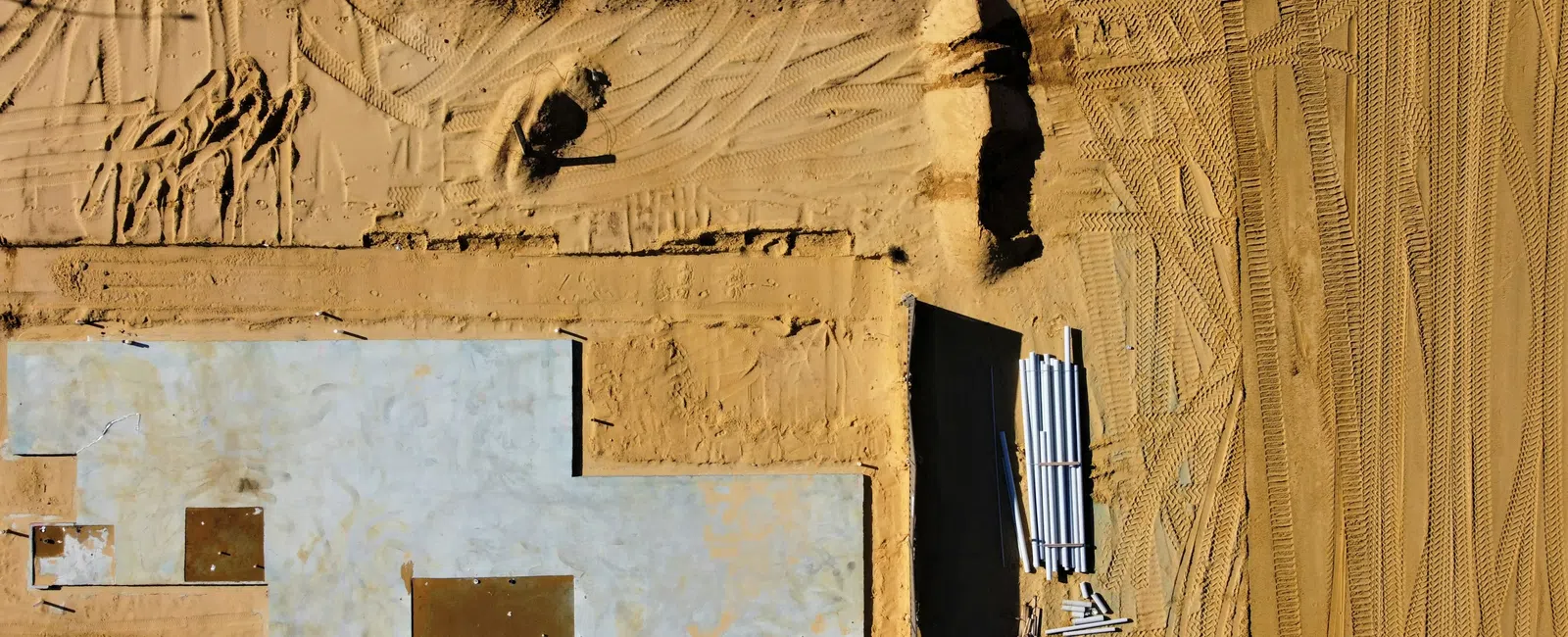
A building pad is the section of a lot that has been stripped, filled, compacted, and tested to carry a slab or foundation, and it usually sits higher than the ground around it so water runs away from the building. On a commercial site it is the last piece of earthwork before the concrete crew arrives. Settled slabs, cracked floors, and water pooling along the foundation line often trace back to the pad rather than to the concrete poured on top of it.
Pad work sits inside the broader site preparation sequence, after clearing, grubbing, demolition, and rough grading. This post covers the pad itself and what Georgia's red clay does to each step of it.
How a Building Pad Differs From a Graded Lot
Rough grading shapes the whole site so it drains. A pad is held to a tighter standard. Its footprint, elevation, material, and compaction are set by the project's civil drawings and geotechnical report, and every lift of fill placed inside that footprint gets checked against those numbers. The pad typically extends past the building line by a distance the geotechnical engineer sets, so the slab edge and the soil supporting it both sit on compacted ground.
On a lot that once held a building, the old slab, footings, and utility stubs have to come out first. Concrete left buried under new fill creates hard spots that settle differently from the soil around them, so breaking out and hauling old concrete is part of getting a redeveloped site ready for a new pad.
Stripping and Proof Rolling the Subgrade
Topsoil, roots, and organic material come off first because they compress and decay under load. On wooded lots, that layer often runs deeper than it looks once stumps and root mats are pulled.
With the subgrade exposed, the crew proof rolls it. A loaded tandem dump truck or heavy roller makes passes across the footprint while the geotechnical technician watches the ground. Soil that ruts, pumps, or rebounds under the wheels marks a soft zone. Those areas get undercut, dug out to firm material, and backfilled in compacted lifts before any pad fill goes down. Skipping this step buries the weak spot under several feet of good fill, where it stays hidden until the slab cracks.
Choosing Fill for a Pad on Georgia Clay
The geotechnical report decides what can go into the pad. On many Piedmont sites, the native red clay can be reused as fill once it is cleaned of roots and debris, because it compacts to high density when its moisture is right. The moisture window for clay is narrow, though. Too wet and it pumps under the roller and never reaches density. Too dry and it breaks into hard clods that leave voids between them. A night of rain can push a clay pad out of spec for days, which is one of several ways Georgia's terrain changes how earthwork gets done.
When the native soil will not work, select fill is imported. The top of the pad is often capped with graded aggregate base, the crushed stone GDOT specifies for road base, to give the slab a firm, free-draining layer directly underneath.
| Material | Where It Is Used | Strengths | What to Watch |
|---|---|---|---|
| Native red clay, reworked | Bulk fill where the geotechnical report approves it | No import needed, compacts dense at the right moisture | Narrow moisture window, slow to dry after rain, loses strength when saturated |
| Imported select fill | Sites where native soil is too wet, organic, or rocky | More consistent material, easier to hit density | Must match the report's specs, adds truck traffic and hauling |
| Graded aggregate base | Top layer directly under the slab | Drains freely, gives a firm working surface | Compacted to its own spec and does not make up for a weak subgrade below |
Placing and Compacting Fill in Lifts
Fill goes down in thin layers called lifts, commonly 8 to 12 inches loose unless the geotechnical report sets a different thickness. Each lift is spread, brought to the right moisture with a water truck or by disking it to dry, and compacted before the next one goes on. Clay usually calls for a padfoot or sheepsfoot roller that kneads the soil, while granular fill and stone compact better under a smooth-drum vibratory roller.
Thick lifts are a familiar shortcut on pad work. A roller can make the surface of a two-foot lift look tight while the bottom of that lift stays loose, and that loose band is where settlement starts once the building's weight is on it.
Density Testing and Pad Elevation
Compaction is measured, not judged by eye. A testing technician checks each lift in place, usually with a nuclear density gauge, and compares the result to the soil's maximum dry density from a laboratory Proctor test. Specifications for structural fill under buildings commonly call for 95 percent of that maximum or higher, along with a moisture range near optimum. A lift that fails gets reworked and retested before anything is built on top of it, and the test reports go into the project record.
The finished pad is graded to the elevation on the civil plans, which puts it above the surrounding ground. The International Building Code, adopted in Georgia with state amendments, calls for ground next to a foundation to slope away at 5 percent for at least 10 feet where site conditions allow. A pad set too low collects water against the slab edge, and clay drains that water slowly.
Weather and Erosion Control During Pad Work
Crews seal the surface with a smooth roller at the end of the day to make water sheet off instead of soaking in, and they keep the pad sloped to shed water while it is under construction.
Commercial sites in Georgia generally need a land disturbance permit, and projects disturbing an acre or more also need coverage under Georgia EPD's stormwater permit for construction. Silt fence, construction exits, and sediment controls go in before grading starts and stay maintained until the site is stabilized. BHH handles erosion control as part of commercial site preparation, so the pad and the controls around it run on one schedule. Permits on the demolition side of a redevelopment are covered in Demolition Permits in Georgia.
Need a Pad Built on Schedule?
BHH Demolition prepares commercial building pads across metro Atlanta and Georgia, including demolition of what is on the lot now, clearing, grading, compaction, and erosion control, all under one crew and one quote. Call 404-974-7920 or request a free quote.