
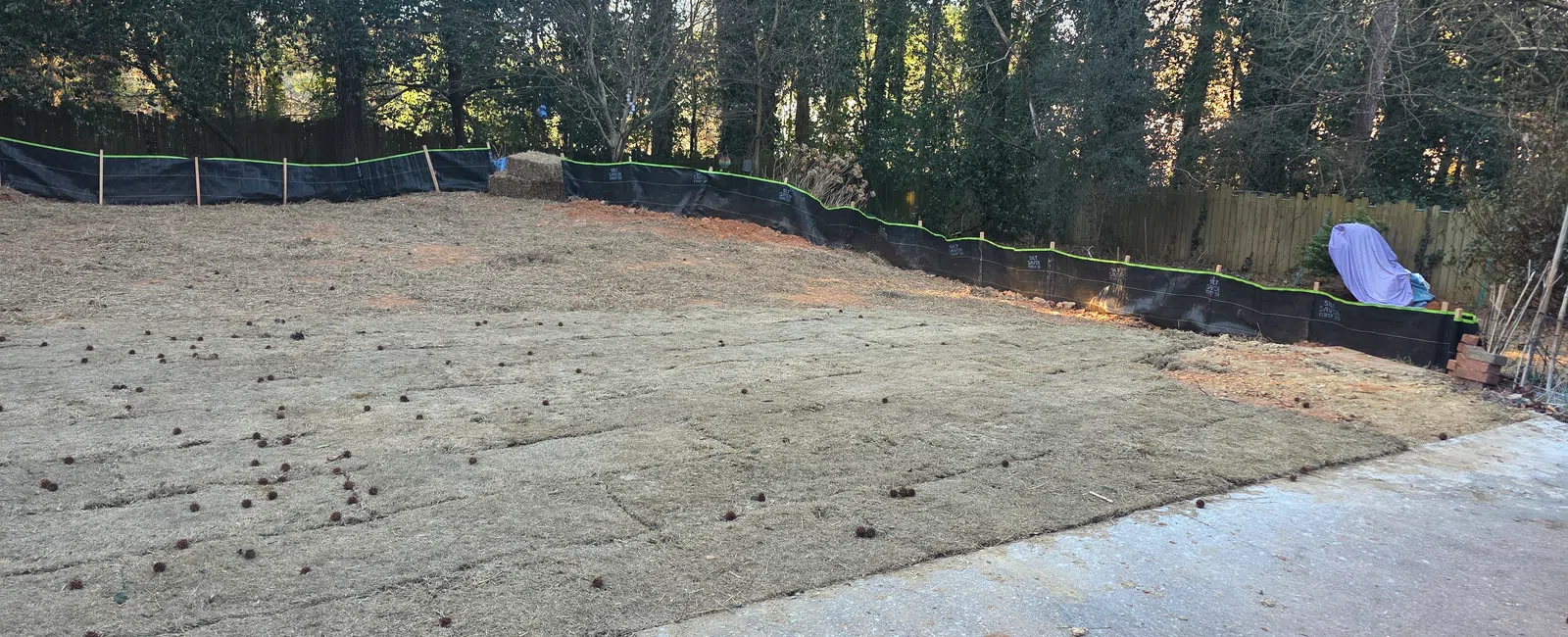
Erosion control on a Georgia construction site is regulated under the state's Erosion and Sedimentation Act of 1975, and the controls have to be installed before clearing or grading begins, not after the first storm. Silt fence, stabilized construction exits, inlet protection, and sediment traps keep soil on the property and out of streets, storm drains, and creeks. When they fail, local inspectors can issue stop work orders, and the grading schedule stops with them.
What Georgia Requires Before Grading Starts
Most commercial projects need a land disturbance permit from the local issuing authority, usually the city or county, plus an erosion, sedimentation, and pollution control plan. Projects disturbing an acre or more also need coverage under Georgia EPD's general stormwater permit for construction. Smaller projects are generally exempt from the permit, but the exemption does not apply to work within 200 feet of perennial state waters or to a lot that is part of a larger common development.
The plan is prepared by a certified design professional and built from the Manual for Erosion and Sediment Control in Georgia. It shows where every control goes, the order they go in, and the undisturbed buffers along state waters. Georgia requires a 25-foot buffer along most streams and a 50-foot buffer along trout streams, and no clearing or grading happens inside those lines without a variance.
The Certified Person Requirement
Georgia law requires someone with Level IA certification from the Georgia Soil and Water Conservation Commission to be on site whenever land disturbing activity is happening. The Commission's guidance is direct about it: if the certified person leaves the site, land disturbing work by that permittee should stop. Subcontractors working under a certified permittee carry a separate certified subcontractor card, and certifications have to be renewed through continuing education every three years.
In practice, this means the crew running the excavator and dozer has to be staffed with certified personnel on every day of grading, not just on inspection days.
Perimeter Controls Go In First
Silt fence goes up along the downhill edges of the disturbed area before any trees come down. It works by slowing sheet flow so heavier soil particles settle out behind the fabric. The bottom edge of the fabric has to be buried in a trench, commonly about 6 inches deep, with the fabric on the uphill side of the posts. A silt fence with its toe laid on the surface instead of trenched in gets undermined by the first heavy rain.
A stabilized construction exit, a pad of coarse stone over geotextile fabric, goes at every point where trucks leave the site so clay shakes off the tires before it reaches the road. Inlet protection goes around storm drains on and near the property. Sediment traps and basins are built at low points where the plan calls for them, giving runoff time to sit before it leaves the site.
| Control | What It Does | Where It Goes | How It Fails |
|---|---|---|---|
| Silt fence | Slows runoff so sediment settles out | Downhill perimeter of disturbed areas | Toe not trenched in, or sediment left to build up until water overtops it |
| Construction exit | Knocks mud off tires before trucks reach the road | Every point where vehicles leave the site | Stone fills with clay and stops working without fresh stone on top |
| Inlet protection | Keeps sediment out of storm drains | Inlets on the site and along adjacent streets | Clogs and ponds water in the street when it is not cleaned |
| Sediment trap or basin | Holds runoff long enough for fine particles to settle | Low points draining the disturbed area | Fills with sediment and passes muddy water straight through |
Why Red Clay Gets Past Controls That Work Elsewhere
Silt fence is good at catching sand and coarse silt. Georgia's Piedmont clay is made of much finer particles that stay suspended in water for a long time, which is why creeks below an active job site turn orange after a storm even when the silt fence is standing. Georgia law treats it as a violation when runoff from a site raises the turbidity of a receiving stream by more than 25 NTUs in warm water streams, or 10 NTUs in trout waters, so muddy discharge is a compliance problem and not only a cosmetic one.
With clay it's crucial to keep less ground exposed at once. Grading in phases, getting temporary cover on finished slopes quickly, and routing runoff through sediment traps does more than adding another row of silt fence. The same clay that makes Georgia earthwork its own kind of job is the reason erosion control planning on a Georgia site starts with how much ground can be opened at one time.
Inspection and Maintenance Until the Site Is Stabilized
Controls only count while they work. Sites covered by the state stormwater permit have to be inspected on a regular schedule and again after significant rainfall, and the findings are recorded. Sediment gets cleaned out from behind silt fence well before it reaches the top, torn fabric is replaced, construction exits get fresh stone, and inlet protection is cleared after storms.
The controls stay in place until the site reaches final stabilization, meaning permanent cover or pavement over the disturbed ground. Pulling silt fence early to make room for finish work is one of the more common ways a site ends up with a violation in the last weeks of a project.
Where Erosion Control Fits in Site Preparation
Erosion control is the first field task of site preparation and the last thing removed. It goes in ahead of clearing and grubbing, stays up through grading and pad work, and comes out after the ground is covered. On a redevelopment site it also has to be in place before demolition of existing buildings and slabs disturbs the soil, which ties it to the demolition permit timeline. BHH handles erosion control as part of its commercial site preparation work, so the controls and the grading run on one schedule under one crew.
Grading a Site in Georgia?
BHH Demolition installs and maintains erosion control as part of commercial site preparation across metro Atlanta and Georgia, alongside clearing, demolition, grading, and pad prep. Call 404-974-7920 or request a free quote.