
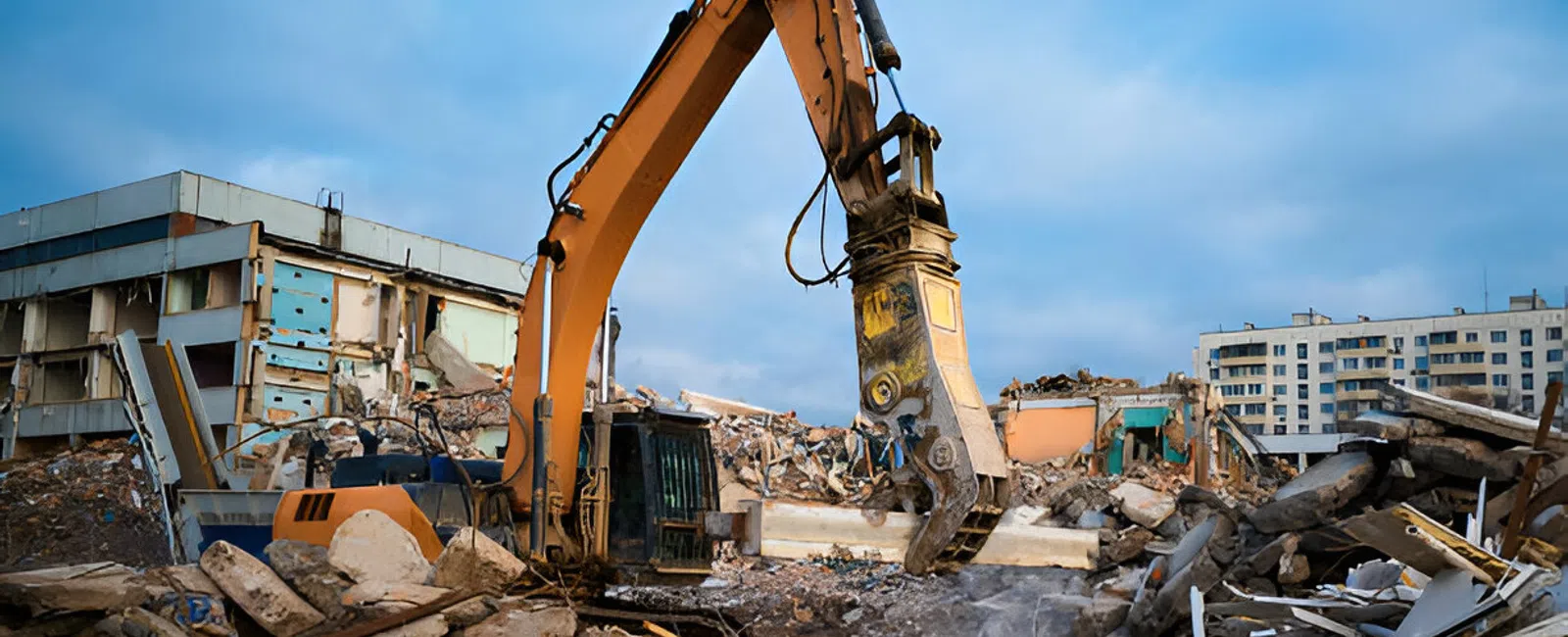
Before a single footing gets poured, before the framing crew shows up, before any of the parts of a build you can actually see, the ground itself has to be made right. That step is called grading, and it is one of the most important things almost nobody outside the trade thinks about. Get it right and the whole project sits on a solid, well-drained base. Get it wrong and you are looking at water in the basement, a cracked slab, or a foundation that settles unevenly down the road.
What Is Grading?
Grading is the process of shaping and leveling the ground to the elevations and slopes a project needs. That might mean flattening a lumpy lot, building up a low spot, or creating a deliberate slope so water runs away from a building instead of toward it. Crews do it by moving soil around, cutting it down where the ground is too high and filling it in where it is too low, until the surface matches the plan. The goal is simple to say and hard to do well: a stable, properly sloped base ready for whatever gets built on it.
Grading vs Clearing, Grubbing, and Excavation
These terms get jumbled together on a job site, but they are separate steps, and it helps to keep them straight:
- Clearing removes the vegetation, trees, brush, and undergrowth, from the surface.
- Grubbing digs out what is below the surface, the roots and stumps that would rot and cause settling.
- Excavation is digging out and hauling away soil, usually to make room for a foundation, basement, or utilities.
- Grading is the shaping and leveling of the soil that is left, setting the final slopes and elevations.
In order, you usually clear, then grub, then excavate and grade. Grading is often the last earthwork step before the build begins, which is exactly why it gets the final say on how the ground performs.
The Two Main Types: Rough and Finish Grading
Grading generally happens in two passes. Rough grading is the heavy lifting: bringing the whole site close to its target shape, establishing the major slopes, and creating a stable base. Finish grading, sometimes called fine grading, is the detail work that follows, smoothing and fine-tuning the surface to its exact final elevation, ready for foundations, pavement, sod, or landscaping. Think of rough grading as the rough draft and finish grading as the final edit. Both matter, and skipping the second one shows up fast once it rains.
Why Grading Matters More Than People Realize
Almost everything that can go wrong with a site after construction traces back to grading. Here is what good grading actually protects you from:
- Water damage. Proper slope directs rain and runoff away from the foundation. Poor grading sends it toward the building, which is a leading cause of basement leaks and foundation problems.
- Uneven settling. A stable, compacted, correctly graded base keeps a foundation or slab from sinking unevenly later.
- Flooding and erosion. Thoughtful grading manages where water goes across the whole site, protecting both your property and your neighbors.
- Code compliance. Many jurisdictions have specific drainage and grading requirements that a build has to meet to pass inspection.
None of this is glamorous, but all of it is foundational, literally. Grading is the quiet step that decides whether the expensive things built on top hold up.
How Grading Gets Done
A grading job starts with a plan and survey that spell out the target elevations. From there, crews use dozers, motor graders, excavators, and skid steers to cut and fill the soil toward those marks, often guided by laser or GPS systems for precision. As the shape comes together, the soil is compacted in layers so it will hold its form and bear weight. The result is a surface that matches the design, drains the way it should, and is ready for the next phase of the build. It is heavy, precise earthwork, not just pushing dirt around.
Where Grading Fits, and Why It Is a Job for Pros
Grading sits right at the handoff between site preparation and construction. After the land is cleared and grubbed, grading shapes the cleaned ground into a buildable, well-drained base, and then the foundation work begins. Doing it well takes the right equipment, an understanding of drainage and soil behavior, and the precision to hit target elevations across an entire site. A small mistake in slope can send water exactly where you do not want it for the life of the building. That is why grading belongs with an experienced crew that does site work day in and day out, not a guess with a rented machine.
Frequently Asked Questions
What does grading mean in construction?
It means shaping and leveling the ground to the slopes and elevations a project requires, by cutting down high spots and filling low ones, so the site is stable and drains correctly before anything is built on it.
What is the difference between rough and finish grading?
Rough grading brings the site close to its target shape and establishes the major slopes. Finish grading is the detail pass that smooths and fine-tunes the surface to its exact final elevation, ready for foundations, paving, or landscaping.
Why is grading so important?
Mostly because of drainage and stability. Correct grading directs water away from the foundation and gives the structure a stable, even base, which prevents leaks, settling, flooding, and erosion down the line.
Does grading come before or after clearing?
After. You clear the vegetation and grub out the roots first, then grade the cleaned soil into its final shape as one of the last earthwork steps before construction.
Getting a Site Ready to Build? Start on Solid Ground
Clearing, grubbing, and grading all have to be done right for everything above them to hold up, and that begins with a team that knows the ground. BHH Demolition is veteran-owned and operated, led by U.S. Army veteran Grady Brain, with more than 23 years of demolition and site work experience, a safety record we stand behind, and a recycling-first approach. We serve the Atlanta metro and communities across Georgia from our home base in Oxford.
We are ready when you are. Call us or contact us online for a free, no-pressure quote, and we will get your site shaped, stable, and ready to build.