
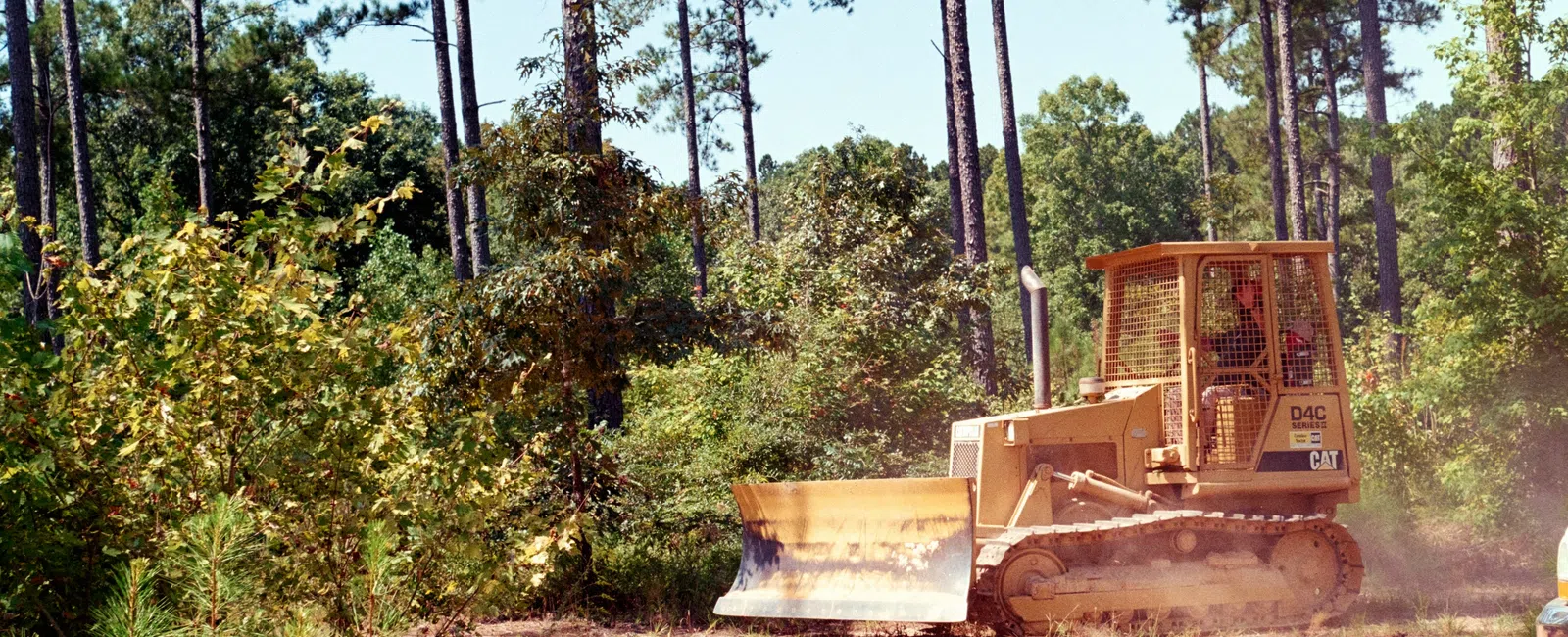
If you have read a site-prep estimate or a construction spec, you have probably seen the phrase clearing and grubbing and wondered what the second half actually means. Clearing is the part everyone pictures, cutting and hauling away trees and brush. Grubbing is the less visible but equally important step that follows: digging out the roots, stumps, and buried organic material left behind. Skip it, and the ground that looks ready to build on can fail you later.
What Is Grubbing?
Grubbing is the removal of roots, stumps, root mats, and buried organic debris from below the surface of a site after the above-ground vegetation has been cleared. Where clearing deals with what you can see, grubbing deals with what is underground: the root systems of trees and shrubs, old buried stumps, and the layer of organic material that will not support a structure. The goal is to leave behind clean, mineral soil that can be compacted and built on. The two steps are so often done together that the industry treats clearing and grubbing as a single phrase, but they are distinct pieces of work.
Clearing vs Grubbing vs Grading
Three terms get used loosely on site-prep jobs, and it helps to keep them straight because each is a separate operation.
- Clearing removes surface vegetation, trees, brush, and undergrowth, from the site. That is the focus of land clearing and of methods like forestry mulching.
- Grubbing removes what clearing leaves behind below grade: the roots, stumps, and organic material that would otherwise rot and shift under a foundation.
- Grading shapes and levels the cleaned soil, setting the slope and elevation the build or the drainage plan needs.
In sequence, you clear, then grub, then grade. All three together are what turn raw or wooded ground into a construction-ready pad, and they are the backbone of site clearing and full site preparation.
Why Grubbing Matters More Than It Looks
Grubbing is easy to undervalue because the site can look finished without it. The problems show up later, and they are expensive.
- Settling and voids. Buried roots and organic material decompose over time, leaving voids in the soil. Anything built on top, a slab, a foundation, a driveway, can crack or sink as the ground gives way beneath it.
- Unstable soil. Organic matter does not compact the way clean mineral soil does. Leaving it in place means the ground never reaches the load-bearing density a structure requires.
- Regrowth and pests. Live roots and stumps left in the ground can send up new growth, and decaying stumps attract termites and other pests toward whatever gets built nearby.
- Drainage trouble. Pockets of rotting material and uneven subsoil disrupt how water moves across and through the site, which can undermine grading and foundations.
In short, grubbing is what makes the difference between ground that looks ready and ground that actually is. It is the step that protects everything built after it.
When Grubbing Is Needed, and When It Is Not
Grubbing is essential whenever something is going to be built on the cleared ground: foundations, slabs, pavement, roads, and most commercial site work all require it. It is part of getting a parcel ready under commercial site preparation and residential lot prep alike.
It is not always necessary, though. If you are simply opening up overgrown land, creating trails or fire breaks, or maintaining a property without building on it, you may not need full grubbing. That is often where forestry mulching fits instead, since it clears vegetation and leaves the root systems in place to stabilize the soil. The right choice comes down to what the land needs to become, which is worth settling before any equipment arrives.
How Grubbing Is Done
Grubbing is heavy, equipment-driven work. After clearing, a crew uses excavators, dozers, and root rakes or grapples to dig out stumps and pull root systems from the ground. Larger stumps may be excavated whole; root mats are raked and lifted. The organic debris is then separated from usable soil and either hauled off or, where appropriate, ground into mulch. Any holes left by removed stumps are backfilled with clean material and compacted so the surface is uniform and stable. Depth matters: grubbing has to reach far enough to remove the material that would cause problems, not just skim the surface.
Why Grubbing Is a Job for Professionals
Grubbing combines heavy equipment, real depth of excavation, and judgment about how clean the soil needs to be for what comes next, with permits and erosion control often layered on top once you disturb past a certain area. Done poorly, it leaves the exact problems it is meant to prevent. A crew that handles land clearing and site preparation end to end knows how deep to go, how to handle the debris, and how to leave ground that is genuinely ready, so the foundation work that follows has solid footing.
Frequently Asked Questions
What is the difference between clearing and grubbing?
Clearing removes the vegetation you can see, trees, brush, and undergrowth. Grubbing removes what is below the surface, the roots, stumps, and organic material that would rot and cause settling. Clearing comes first, then grubbing.
Do I always need grubbing?
Not always. If you are building on the ground, yes, it is essential for a stable base. If you are just opening up land without construction, methods like forestry mulching that leave the roots in place may be enough. It depends on what the site is for.
What happens to the stumps and roots that are removed?
They are separated from the usable soil and either hauled off or ground into mulch, where that makes sense. The holes left behind are backfilled with clean material and compacted so the surface ends up uniform and buildable.
Getting a Site Ready to Build? Let Us Take a Look
Clearing, grubbing, and grading all have to be done right for the ground to hold what comes next, and that starts with someone who knows what your site needs. BHH Demolition is veteran-owned and operated, led by U.S. Army veteran Grady Brain, with more than 23 years of demolition and clearing experience, a safety record we stand behind, and a recycling-first approach. We serve the Atlanta metro and communities across Georgia from our base in Oxford.
Call us or tell us about your site online, and we will recommend the right approach and put a free quote behind it.