
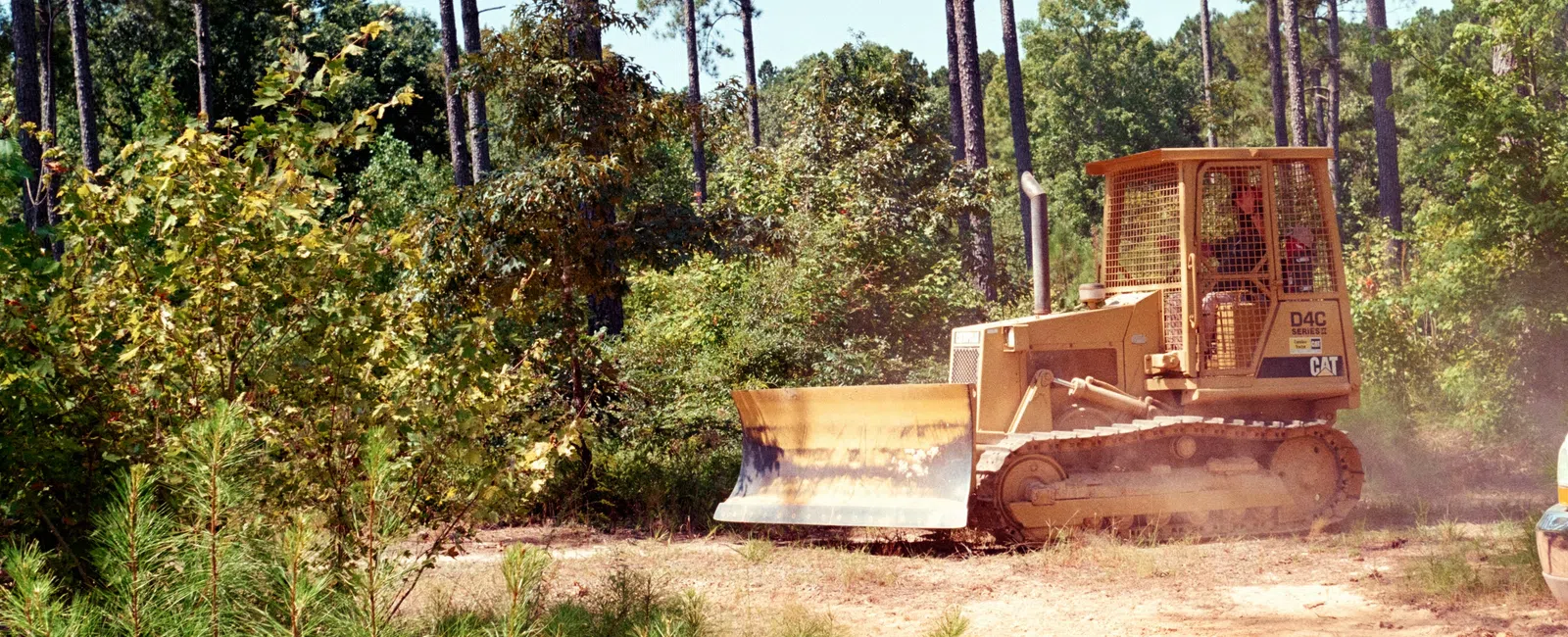
Land does not stay open on its own. Leave a field, a fence line, or a wooded lot alone for a few seasons and brush takes over: thick undergrowth, saplings, vines, and tangled vegetation that turns usable ground into an impassable mess. Brush clearing is how you take that land back. It is one of the most common and useful kinds of land work, whether you are reclaiming a property, reducing a fire hazard, or improving habitat for wildlife.
What Is Brush Clearing?
Brush clearing is the removal of overgrown, low-level vegetation from a piece of land: undergrowth, shrubs, vines, saplings, and small trees. It is the lighter, more selective cousin of full land clearing. Where land clearing removes everything down to bare ground, including large trees and stumps, brush clearing focuses on the tangled growth that chokes a property while often leaving the mature, desirable trees in place. The goal is to open the land back up and make it usable again, without necessarily stripping it down to dirt.
Why Clear Brush in the First Place?
Overgrown brush is more than an eyesore. Clearing it solves a list of real problems:
- Reclaiming usable land. Thick brush makes the ground impossible to walk, farm, build on, or enjoy. Clearing it gives the land back.
- Reducing fire risk. Dense, dry undergrowth is wildfire fuel. Clearing it creates space and lowers the hazard around structures.
- Cutting back pests. Overgrowth harbors snakes, rodents, ticks, and mosquitoes. Opening it up makes a property safer and more comfortable.
- Improving value and appearance. A clean, open property simply looks better and is worth more than a tangled one.
- Prepping for a project. Brush clearing is often the first step before building, fencing, planting, or further site work.
- Improving wildlife habitat. Done thoughtfully, clearing can actually make land better for deer and other wildlife, more on that below.
Brush Clearing vs Land Clearing vs Forestry Mulching
These terms overlap, so it helps to separate them. Brush clearing removes the lighter vegetation, the undergrowth, shrubs, and saplings, while often keeping mature trees. Full land clearing goes further, taking out everything, including large trees, and usually pairs with stump and root removal to leave bare, build-ready ground. Forestry mulching is a method rather than a goal: a machine grinds vegetation into mulch on the spot, which is a clean, low-impact way to handle a lot of brush. Many real projects combine these, and the right mix depends on the property and what you plan to do with it. A crew that does all of them can match the approach to the job instead of forcing one method onto every site.
Selective Clearing
Here is where experience really matters. The instinct on an overgrown property is to clear-cut, take it all down to the ground. But that is usually the wrong move. Selective clearing means removing the unwanted brush and growth while deliberately keeping the trees and features worth saving, the mature shade trees, the healthy hardwoods, the natural windbreaks and buffers. There are good reasons to do it this way. Mature trees add value, shade, and beauty that take decades to replace. Keeping root systems and ground cover in the right places controls erosion, which matters a lot on Georgia's clay and slopes. And a selectively cleared property looks intentional and cared-for, not scalped. The skill in brush clearing is not knocking everything down. It is knowing what to take and what to leave.
Brush Clearing for Wildlife and Hunting Land
For landowners and hunters, selective brush clearing is one of the most useful tools for improving a property. Opening up an overgrown, choked woodlot lets sunlight reach the forest floor, which brings back the low, leafy browse deer actually eat. Clearing strategically also creates edge habitat, the productive transition zones between open and cover that wildlife love, and opens up space for food plots, shooting lanes, and access. Smart clearing improves a property for deer; clear-cutting can strip away the very cover and food that hold them. Tying the clearing into a broader habitat plan is what turns raw acreage into productive hunting ground.
How the Work Gets Done
Brush clearing is done with the right equipment for the property: forestry mulchers that grind brush into mulch on site, along with the machines and tools to cut, gather, and haul heavier material. The method depends on the density of the growth, the terrain, and what you want the finished land to look like. On Georgia ground, especially, the work also has to account for slope and erosion, since stripping vegetation off a hillside without a plan invites washouts. This is the kind of job where matching the equipment and approach to the site makes the difference between a clean result and a torn-up mess.
Why Brush Clearing Is Usually a Job for a Pro
Clearing a small patch by hand is one thing. Taking on an acre or more of dense brush, on uneven or sloped ground, with mature trees to protect and erosion to manage, is another. It calls for serious equipment, the experience to clear selectively without damaging what should stay, and a plan for the debris and its disposal. A professional crew brings the machinery to do it efficiently and the judgment to do it right, leaving you with open, usable, stable land instead of a scarred property and a pile of brush to deal with. For anything beyond a small area, hiring it out is the safer and often better-value call.
Frequently Asked Questions
What is the difference between brush clearing and land clearing?
Brush clearing removes lighter vegetation like undergrowth, shrubs, and saplings while often keeping mature trees. Full land clearing removes everything, including large trees and stumps, to leave bare, build-ready ground. Brush clearing is the lighter, more selective work.
What is selective clearing?
Selective clearing means removing unwanted brush and growth while deliberately keeping the trees and features worth saving. It protects value, shade, and erosion control, and it is usually a smarter approach than clear-cutting everything.
Does brush clearing help with wildfire risk?
Yes. Dense, dry undergrowth is wildfire fuel, so clearing brush, especially around structures, reduces the available fuel and creates defensible space around a property.
Can brush clearing improve hunting land?
Done selectively, very much so. Opening an overgrown woodlot brings back low browse deer eat, creates edge habitat, and makes room for food plots and shooting lanes. The key is clearing strategically rather than clear-cutting.
Got Overgrown Land in Georgia? Let's Open It Back Up
Whether you are reclaiming a property, reducing a fire hazard, prepping for a project, or improving your hunting ground, brush clearing done the right way makes the land usable again without wrecking what is worth keeping. BHH Demolition is a veteran-owned, licensed, and insured company led by U.S. Army veteran Grady Brian, with more than 23 years of land and site work across Georgia, a strong safety record, and a recycling-first approach. We serve property owners, landowners, and hunters across the state from our home base in Oxford.
We are ready when you are. Call us or contact us online for a free, no-pressure quote, and we will help you take your land back, the right way.