
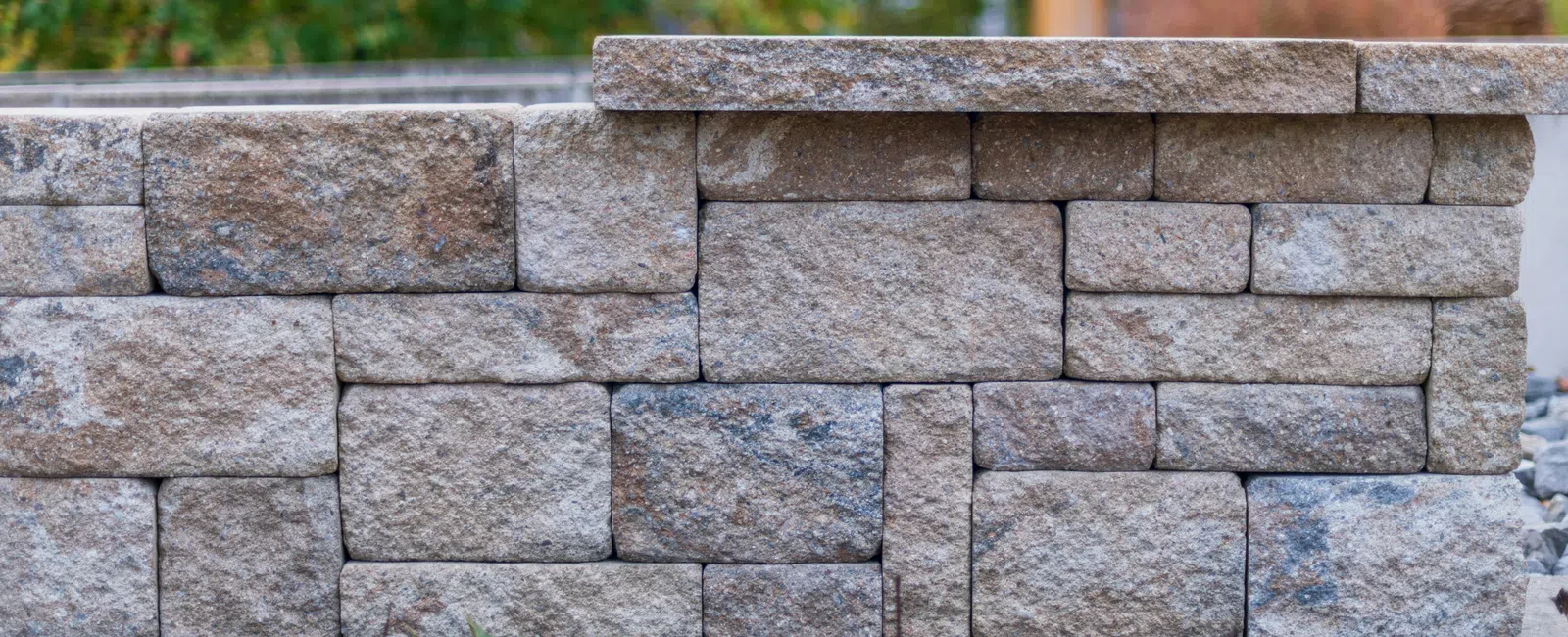
Retaining wall removal is a two-part job: taking the wall apart and dealing with the soil it was holding back. A wall that leans, bulges, or cracks is usually still carrying load, so pulling it out without a plan for the slope behind it can turn a slow failure into a fast one. On Georgia's hilly lots, where walls hold back wet red clay along driveways, backyards, and parking areas, that second part often takes more planning than the demolition itself.
Signs a Retaining Wall Needs to Come Out
A wall that tilts forward at the top is getting weak pushed by the soil behind it. Other signs include a face that bulges outward in the middle, horizontal cracks or stair-step cracks running through block joints, sections separating at the corners, and soil washing out from the base or the ends. Timber walls show rot where ties meet the ground, and posts or deadmen pulling loose from the hillside. A wall face that stays wet or shows white mineral staining is a sign that water is building up behind it with nowhere to go.
Small cosmetic cracks in a wall that is still plumb can often be watched. Movement that gets worse after heavy rain is the kind that usually ends with removal and replacement.
Why Retaining Walls Fail
Most failed walls fail because of water. Soil saturated after a storm is heavier and pushes harder, and Georgia clay holds water longer than sandy soil. A properly built wall has free-draining gravel behind it, a perforated drain pipe at the base, and weep holes or outlets so that water can escape. Many older walls have none of these, or have drains that clogged with clay years ago.
Other causes include a footing that is too small or too shallow, segmental block walls built without geogrid reinforcement extending back into the soil, walls built taller than their design allows, and added load at the top, such as a driveway, a parking area, or a structure set too close to the edge.
How Different Wall Types Come Apart
The material decides the method, the equipment, and the debris.
| Wall Type | How It Is Removed | What Comes Out |
|---|---|---|
| Poured concrete | Broken with a hydraulic breaker on an excavator, rebar cut and separated | Concrete rubble, steel, and the footing below grade |
| Concrete block (CMU) | Broken down course by course; grouted and reinforced cores take more work | Block, grout, rebar, and the footing |
| Segmental block | Units pulled by hand or machine, layer by layer | Block units, geogrid layers buried in the backfill, and gravel |
| Stacked stone or boulder | Lifted out with an excavator and thumb | Stone, which can sometimes be reused on site |
| Timber or railroad tie | Pulled apart, with deadmen and anchors dug out of the slope | Treated wood kept separate from clean debris |
Concrete and block walls also have a footing below grade. Leaving it in place can be fine when the area becomes lawn, but it gets in the way when a new wall, a slab, or utilities are going in at the same spot.
The Soil Behind the Wall
Once the wall comes out, the soil it held has to go somewhere. There are usually three options: cut the slope back to a stable angle, regrade the area so the wall is no longer needed, or build a replacement wall. The right choice depends on how much height the wall was retaining, how much room there is on the property, and what sits at the top of the slope.
Crews typically work from the top down, pulling back soil as the wall comes apart, so the remaining section is never left holding the full load. Wet weather matters here. Exposed clay slopes erode quickly in a Georgia thunderstorm, so the slope needs to be graded and covered soon after the wall is gone. This is the same clay behavior that makes Georgia's terrain change how earthwork gets done.
Utility lines often run behind or under retaining walls, especially along driveways. Georgia law requires a call to Georgia 811 before digging, so that buried lines are marked before excavation starts.
Hauling and What Gets Left Behind
A retaining wall produces more debris than its face suggests, since the footing, drain stone, and buried reinforcement all come out with it. Concrete and block are heavy, and access matters on a residential lot, where equipment may have to come down a driveway or across a yard. BHH breaks out and hauls concrete and block as part of its concrete demolition work, and a site with other material to clear can be handled through building debris removal at the same time.
Frequently Asked Questions
How Do You Know if a Retaining Wall Is Failing?
The main signs are a wall leaning forward at the top, bulging in the middle, horizontal or stair-step cracks, separating corners, soil washing out at the base, and a face that stays wet after rain. Movement that increases after storms points to a wall that is losing to the soil behind it.
Can You Remove a Retaining Wall Yourself?
A short garden wall of loose stone or small block can be taken apart by hand. A wall holding back significant soil, or one built of reinforced concrete or block, needs equipment, a plan for the slope, and utility locates before digging, because the soil can move as soon as the wall is gone.
Do You Need a Permit to Remove a Retaining Wall?
Permit rules vary by city and county in Georgia. Walls taller than about 4 feet are generally treated as engineered structures under building codes, so a replacement wall of that height usually needs a permit and design. Check with the local building department before work starts.
What Happens to the Soil After a Retaining Wall Is Removed?
The slope is cut back to a stable angle, regraded so it no longer needs a wall, or held by a new wall. Exposed soil should be graded and covered soon after removal to keep it from eroding.
Have a Retaining Wall That Needs to Come Out?
BHH Demolition removes concrete, block, stone, and timber retaining walls across metro Atlanta and Georgia, including the footing and hauling everything off site. Call 404-974-7920 or request a free quote.