
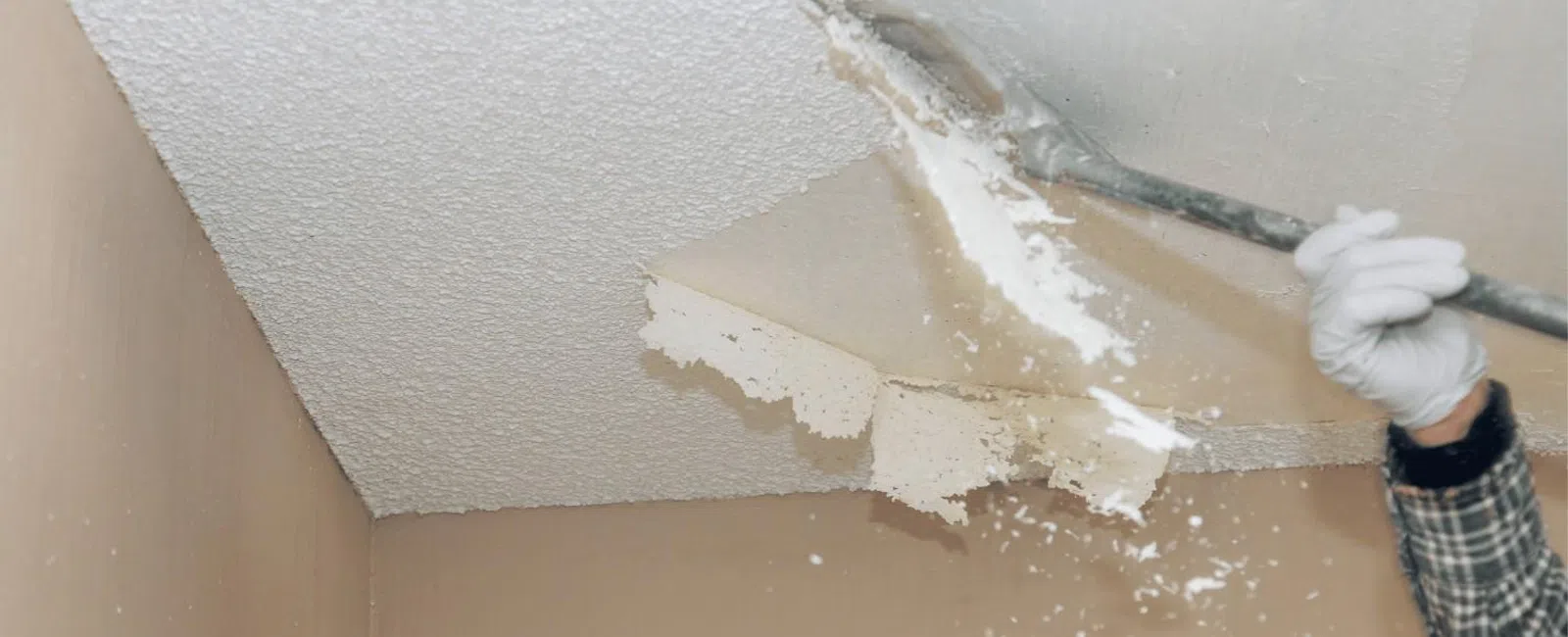
That bumpy, cottage-cheese texture overhead is one of the most dated features a home can have, and plenty of people cannot wait to scrape it off for a clean, modern look. But if your house is more than a few decades old, hold the scraper for a second. There is a real chance that your popcorn ceiling contains asbestos, and scraping it is one of the worst things you can do if it does.
Spray-on textured ceilings were everywhere from the 1950s through the 1980s, and for much of that run, asbestos was part of the mix.
Why Popcorn Ceilings and Asbestos Go Hand in Hand
Builders loved spray-on popcorn texture because it was cheap, hid imperfections, and dampened sound. Asbestos got added to a lot of those mixes because it made the material more fire-resistant and helped it hold together. The result was decades of ceilings across the country quietly containing asbestos fibers.
The use of asbestos in these products was largely phased out starting in the late 1970s, but older stock kept getting installed into the mid-1980s. The practical takeaway: the older the ceiling, the higher the odds. A ceiling sprayed in the 1960s or 1970s is a strong suspect. One done in the 2000s almost certainly is not.
Do All Popcorn Ceilings Have Asbestos?
No, not every popcorn ceiling contains asbestos, and plenty of newer ones contain none at all. Age is your best clue, ceilings from before about 1980 carry the highest risk, and those installed after the early 1990s are unlikely to, but you cannot tell the difference by looking at it.
Can You Tell Just by Looking? Not a Chance
An asbestos popcorn ceiling and an asbestos-free one look exactly the same. The fibers are microscopic, the texture is identical, and a coat of paint hides any clues there might have been. The only way to know for certain is a laboratory test on a small sample. And please, do not collect that sample yourself by scraping a patch off, that is exactly the disturbance you want to avoid. A certified inspector can take a sample safely and get you a real answer.
The Real Danger Is Scraping It Off
An intact popcorn ceiling, especially one that has been painted, is generally low risk just sitting there. The fibers stay locked in place. The danger arrives the moment you disturb it. Scraping, sanding, or the classic spray-it-with-water-and-scrape-it-down method all send asbestos fibers straight into the air of the room you are standing in.
That is why a popcorn ceiling removal is one of the most common ways homeowners accidentally expose themselves to asbestos. The weekend project that seems so harmless is exactly the wrong move if those fibers are up there. The ceiling is not the threat, but scraping it is.
So What Should You Actually Do?
If you suspect your popcorn ceiling has asbestos, here is the safe path:
- Do not scrape, sand, or wet-and-remove it. Every one of those releases fibers. And skip taking your own sample.
- Leave an intact ceiling alone for now. In many cases, a sound asbestos ceiling can be painted over or covered with a layer of drywall instead of removed, which seals it in. That is a decision to make after testing, not before.
- Have it tested by a licensed professional. If it comes back positive, licensed removal is the only safe way to take it down.
Removing an asbestos popcorn ceiling is not a DIY job. It is regulated work that needs containment, proper protective gear, and certified disposal. This one belongs to the pros.
Why This Matters Before a Remodel or Teardown
Ceilings come down constantly during interior remodels and full teardowns, which is exactly why testing belongs at the start of a project, not in the middle of the demolition. On any renovation or teardown of an older home, the smart move is to flag a suspect popcorn ceiling up front and, if it tests positive, have licensed crews remove it before the rest of the work starts. Handle it early and it is just another step. Ignore it and it becomes a hazard nobody planned for.
Frequently Asked Questions
How can I tell if my popcorn ceiling has asbestos?
Age is the biggest clue, ceilings from before about 1980 are the highest risk, but you cannot confirm it by sight. Only a lab test on a safely collected sample can tell you for sure.
Do all popcorn ceilings have asbestos?
No. Many do not, especially newer ones. The older the ceiling, the higher the odds. Since you cannot tell by looking, an older popcorn ceiling should be treated as a suspect and tested before any work.
Is it safe to leave an asbestos popcorn ceiling in place?
Generally, yes, if it is intact and undisturbed. Many homeowners choose to paint over it or cover it with drywall rather than remove it, which keeps the fibers sealed in. Confirm the material with a test first.
Renovating or Tearing Down an Older Home? Test First, Then Call Us
If your project means scraping or removing an old popcorn ceiling, find out what is up there before you touch it. BHH Demolition is veteran-owned and operated, led by U.S. Army veteran Grady Brain, with more than 23 years of experience, a safety record we stand behind, and asbestos handling built into every job. We serve the Atlanta metro and communities across Georgia from our home base in Oxford.
We are ready when you are. Call us or contact us online for a free, no-pressure site evaluation, and we will make sure your project starts safe and stays compliant.