
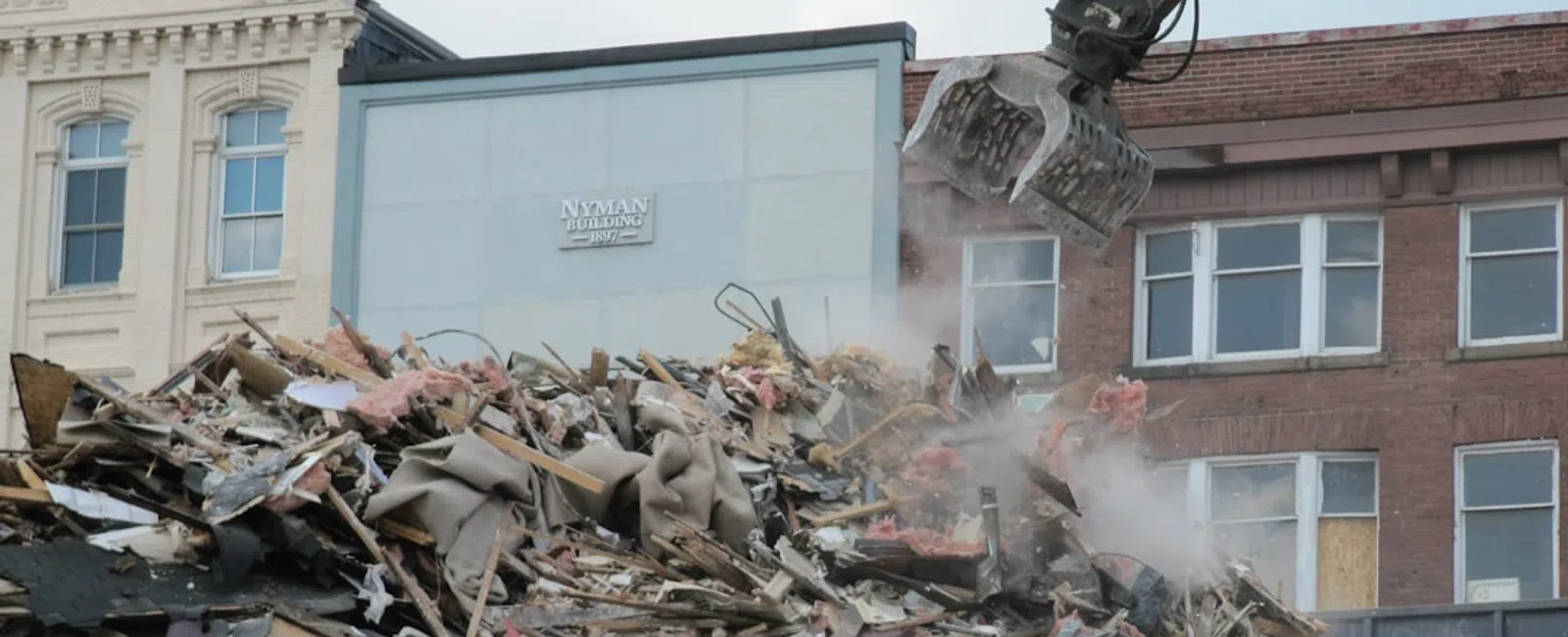
If you are planning to take down a commercial building, the first number you will hear is a price per square foot. Most commercial demolition lands roughly between $4 and $8 per square foot, but that spread is wide for a reason: two buildings with the same footprint can price very differently depending on what they are made of, where they sit, and what is hiding inside them. Understanding what moves the number helps you read a bid intelligently and budget the whole project, not just the teardown.
What the Per-Square-Foot Price Does (and Does Not) Cover
Per-square-foot pricing is the industry convention because building size is the biggest cost driver: more structure means more labor, more machine time, and more hauling. A typical base rate covers the teardown itself, the crew and equipment, and standard debris handling.
What it usually does not cover is everything around the teardown. Hazardous material testing and abatement, permit fees, utility disconnects, foundation and slab removal, and post-demolition grading are often priced separately. This is why two bids can look far apart while describing the same job. A trustworthy estimate itemizes these pieces instead of burying them, and the only way to get a real number for your building is a site visit and a written quote.
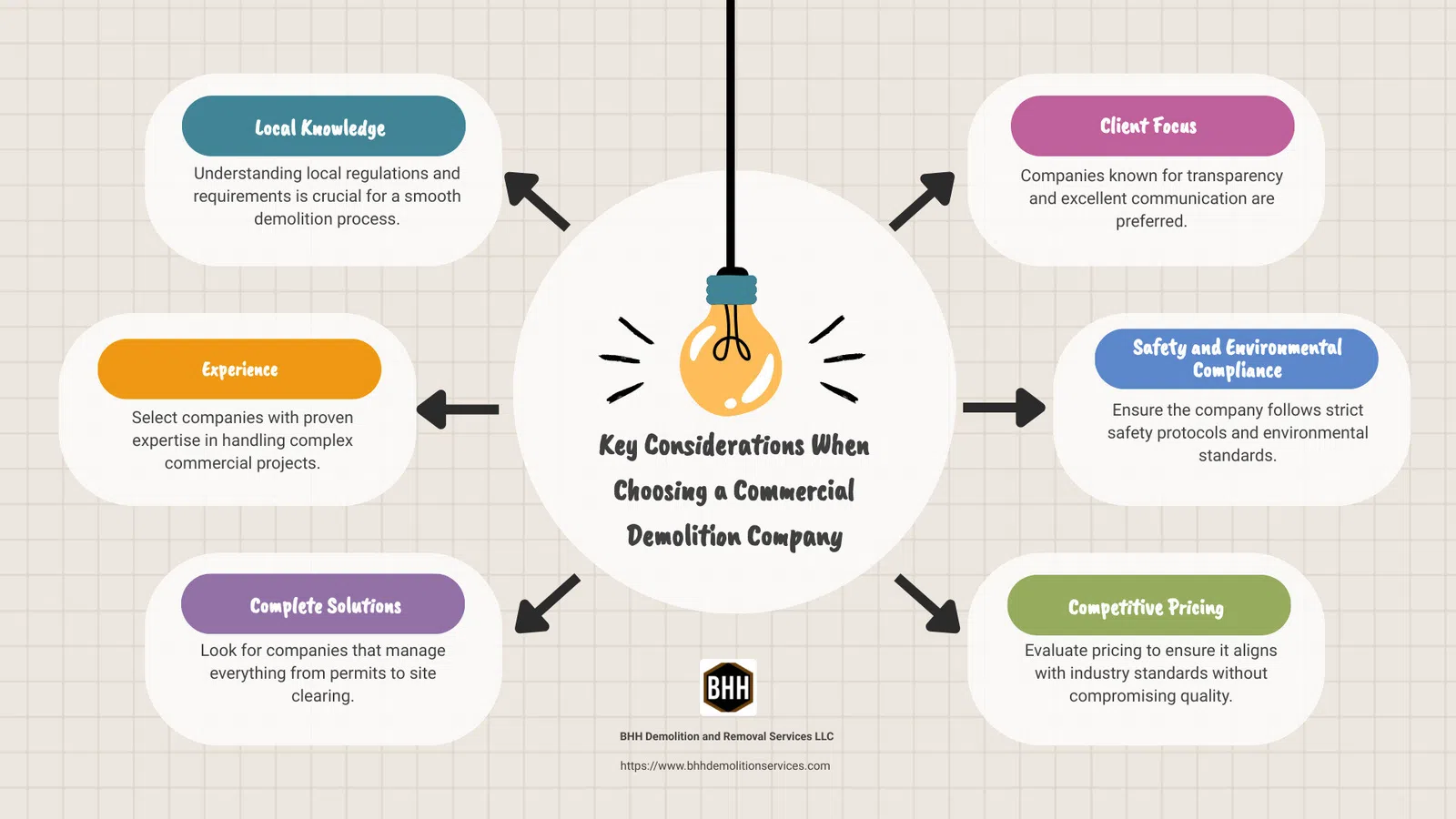
The Factors That Move Commercial Demolition Cost
Building size and height set the baseline. Larger floor plates take longer, and taller structures call for high-reach excavators or staged dismantling rather than conventional equipment.
Construction type matters as much as size. A wood-framed retail shell comes down quickly. Steel takes cutting and sorting. Concrete is the heavy one: breaking, crushing, and hauling it is its own scope of work, which is why concrete demolition and slab removal is often itemized separately from the structure above it.
Location and access shape the method. A freestanding warehouse on an open lot allows big equipment and fast cycles. A building on a dense commercial corridor, sharing walls or sitting tight against neighbors, requires slower, more controlled work and protection for everything around it. That is a regular reality on demolition projects across Atlanta, where staging room and traffic control become part of the plan.
Hazardous materials are the most common budget surprise. Buildings of a certain age frequently contain asbestos or lead, and detecting and safely removing asbestos before demolition is a regulated, licensed process that has to finish before teardown begins. Testing early keeps it a line item instead of a mid-project crisis.
Debris volume and disposal close out the job. Tipping fees are real money, and they scale with tonnage. Salvaging steel and crushing concrete for reuse can offset part of the cost, which is why our debris removal and recycling approach aims to keep as much material as possible out of the landfill.
Finally, scope changes everything. Taking a building to grade is one price; gutting the interior while preserving the shell is a different job entirely. If you are renovating rather than clearing the site, commercial interior demolition prices on its own terms, usually by the scope of the strip-out rather than the building footprint.
Budgeting Beyond the Square-Foot Number
A realistic demolition budget has more in it than the headline rate.
- Build in a contingency. Older commercial buildings hide surprises behind walls and under slabs. A cushion in the budget keeps a discovery from becoming a stoppage.
- Account for permit fees. These vary by jurisdiction across Georgia, and the permitting timeline can affect your schedule as much as your budget.
- Plan for what comes after. Grading, fill, compaction, and utility work to ready the site for construction are their own scope. Folding them into the demolition contract often beats hiring a second contractor.
- Get more than one written quote. A detailed proposal that itemizes abatement, hauling, and site work tells you more about a contractor than the bottom number does.
Why the Contractor You Choose Changes What You Pay
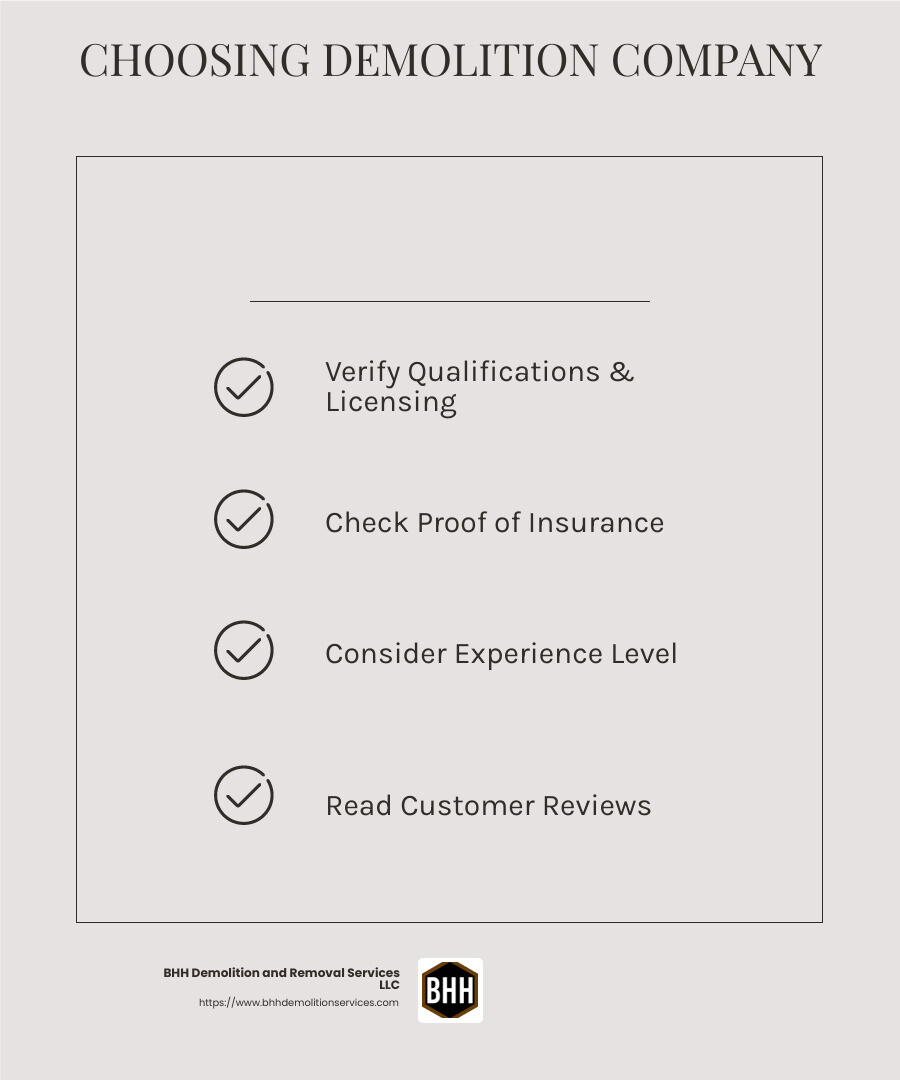
The cheapest bid is not always the cheapest project. An underinsured crew puts the liability on you. An inexperienced one misses hazards in the walkthrough, then change-orders them later. When you compare bids, weigh licensing and insurance you can verify, a track record on buildings like yours, reviews from commercial clients, and the detail level of the written estimate.
This is where local experience pays for itself. A contractor who already knows the permitting offices, disposal facilities, and recycling outlets in your county turns those relationships into schedule and cost savings. It is the core of how our commercial demolition service is built: rigorous safety planning, clear communication, and an estimate that means what it says.
Frequently Asked Questions
How do contractors calculate commercial demolition costs?
The estimate starts with square footage and construction type, then layers in access, hazardous material findings, debris tonnage, and disposal distance. Anything outside the base teardown, such as abatement or foundation removal, is itemized. If a bid is one flat number with no breakdown, ask questions.
Does the price include debris removal?
Not always, so confirm it. Some contractors quote the teardown and leave hauling to you. We include debris removal and recycling in our projects so the site is handed back clean and construction-ready.
Do I need permits for commercial demolition in Georgia?
Yes. Every jurisdiction we work in requires demolition permits for commercial structures, and most require documented utility disconnects and, where applicable, asbestos clearance before issuing them. We manage the permitting as part of the project.
Get a Real Number for Your Building
Ranges are useful for planning, but your building deserves a real figure based on a real walkthrough. BHH Demolition is veteran-owned and operated, led by U.S. Army veteran Grady Brain, with more than 23 years of commercial demolition experience, an impeccable safety record, and a recycling-first approach to debris. We serve the Atlanta metro and communities across Georgia from our base in Oxford.
Call us or reach out online for a free, no-pressure quote on your commercial demolition project.